|
|
Posted By Kate Kleinert, on February 8th, 2021
Need for Pastoral Care of the Clergy
Herefordshire Monastery of Benedictine Sisters – used with permission
I know the word ‘pastoring’ doesn’t really exist, but I wish it did because it expresses something we are apt to forget. Those to whom we look for pastoral care are themselves in need of care and support. Throughout this pandemic we have heard a lot from parishioners who are sad or unhappy at the way in which some clergy have seemed unresponsive to their needs, especially during periods of lockdown or church closure. As one disgruntled man remarked, ‘They think they have done enough by becoming third-rate movie stars with their live-streamed Masses and what not.’ I daresay some have; but most haven’t. They have tried to be good and dutiful priests in a situation none of us has met before. A few have been blessed with the imagination and creativity to meet the new circumstances positively, but many more have struggled and one or two have been utterly crushed by the experience.
Some clergy have felt abandoned by their bishops and left to soldier on, not sure what to do for the best. They have been burdened with an extra load of admin at the very time when those they chiefly rely on to help — mainly more senior members of the parish, who may well be shielding because of age or infirmity — are not available. They live alone; some admit to being close to breaking-point, others cannot bring themselves to articulate their feelings of loneliness and discouragement. For them celebration of the Holy Mysteries is not the only aspect of priesthood that gives joy and purpose to their lives. They miss the interaction with people. More than one has confessed that, being naturally shy and without the ‘excuse’ that coffee after Mass or regular parish meetings of one kind or another provide, they are becoming more and more isolated.
Wrap and Throw Service
Happily, this is where the brotherhood of the priesthood takes on fresh meaning and importance. It has been heartening to learn of the support received from friendly ‘phone calls and video meetings with fellow priests; but it isn’t enough. Here at the monastery we do our best to listen non-judgementally and sympathetically to those who feel the need to unburden themselves of the distress they feel. I hope we manage to reassure them that they are not letting the side down or being a failure because they are not exercising their priesthood in ways familiar to them. We try to give encouragement. In the monastery we refer to this as our ‘Wrap and Throw Service’, meaning we do our best to wrap those who come to us in the love of God and throw them back into their parishes to minister to others. But again, it isn’t enough.
The Role of Parishioners
The people best placed to support the clergy through this time of pandemic are their parishioners. Yes, you! The bishop can only do so much; fellow priests and monasteries can only do so much; but you are there. You know your priest in a way no one else does. It does not take much time to send a friendly email asking how he is and saying you miss seeing him on a regular basis. A word of thanks and appreciation for what he is doing to meet the needs of the parish will never go amiss. An offer of help may be warmly received. Who can tell? Pastoring our pastors isn’t a difficult art. It simply requires a warm heart and the ability to see the human person wearing the collar — someone just as much in need of encouragement as we are ourselves.
Posted By Kate Kleinert, on February 1st, 2021 February 2021
Lord, just as I believe that at an earlier time
(I may have been sinful and not fully open to Your will)
so now I realize that, because of Your abundant mercy
and in Your own time, You have shown an abundance of Your mercies to (me)…
Give glory to Your name,
(may I) offer the fragrance of good life, doctrine, and good reputation
to the whole Christian people.
I ask you therefore, Lord Jesus Christ, Father of mercies,
not to consider our ingratitude.
May (I) always be mindful of the abundant mercies which you have shown (me),
that (I) may always … glorify Your name blessed and glorious throughout the ages.
Amen.
(Paraphrase [in parenthesis] of the blessing of Saint Francis for the City of Assisi)
Chapter XII
HOW BLESSED FRANCIS WITH HIS ELEVEN COMPANIONS WENT TO THE PAPAL CURIA
THAT HE MIGHT INFORM HIM OF THEIR PROPOSAL
AND HAVE THE RULE THAT HE HAD WRITTEN CONFIRMED
1
Seeing that the Lord would increase his brothers in number and merit, since there were already twelve most perfect men expressing the same belief, blessed Francis said to the eleven, he being the twelfth, their leader and father: “Brothers, I see that the Lord mercifully wants to increase our congregation. Then, going to our mother, the holy Roman Church, let us inform the Supreme Pontiff what the Lord has begun to do through us, that, with his will and command, we may continue doing what we have undertaken.” – Time heals what reason cannot
2
And since the proposal of their father pleased the other brothers, and they had embarked together with him on the journey to the Curia, he said to them: “Let us make one of us our leader and consider that man a kind of vicar of Jesus Christ, so that wherever he wants to go, we will go, and whenever he wants to rest, we will rest.” – It is magnificent to grow old if one keeps young.
3
And they chose Brother Bernard, the first after blessed Francis, and, as the father said, they served him. They, then, made their way rejoicing and spoke about the words of the Lord, not daring to say anything except for the praise and glory of God and the benefit of the soul, and they frequently spent time in prayer. – Time cries out to each one, ‘Advance’.
4
When they arrived in Rome and found the bishop of the city of Assisi there, they were received with immense joy, for he honored blessed Francis and all the brothers with special affection. Not knowing the reason for their arrival, he began to be apprehensive, fearing that they might want to leave their native land, where the Lord had begun to do marvelous things through them. – Take time to laugh; it is the music of the soul.
5
For he rejoiced to have in his diocese such men whose life and conduct he greatly appreciated. After he learned their purpose and understood their plan, however, he was overjoyed and promised them his counsel and help. – My worth to God in public is what I am in private.
6
During the few days they were staying with that man, they so edified him with their holy words and example, that, seeing what he had heard about them to shine in deed, he commended himself humbly and devoutly to their prayers. He even asked them, as a special grace, to be considered one of their brothers. – Never consider anything of worth that makes you break your word or lose your self-respect.
7
Then asking blessed Francis the reason why he came and hearing from him their entire proposal and intention, he offered to be their procurator at the Curia. That cardinal then went to the Curia and told the Lord Pope Innocent III: “I found a most perfect man, who wishes to live according to the form of the holy Gospel, and to observe evangelical perfection in all things. I believe that the Lord wills, through him, to reform the faith of the holy Church throughout the world.” Hearing this, the lord pope was greatly amazed and had the cardinal bring blessed Francis to him. – Power is never good unless the one who uses it is good,
8
On the following day, therefore, the man of God was presented by that cardinal to the pope, to whom he revealed his entire holy proposal. The pope, a man of extraordinary discernment, in due fashion assented to Francis’s request, and encouraged him and his brothers in many ways. He blessed them saying: “Go with the Lord, brothers, and as He will see fit to inspire you, preach penance to everyone. When almighty God increases you in number and grace, come back to us. We will grant you more, and entrust you with a greater charge.” – You are not bound to win, but you are bound to be true.
9
Before the saint left his presence, the Lord Pope wanted to know whether what had been, and what would be conceded, was according to the Lord’s will. And so, he said to him and his companions: “My dear young sons, your life seems to Us exceptionally hard and severe. While We believe there can be no question about your living it because of your great zeal, We must take into consideration those who will come after you lest this way of life seem too burdensome.” – Patient endurance attains all things.
10
The pope saw that their constancy of faith and the anchor of their hope were so firmly grounded in Christ, that they did not want to be shaken from their enthusiasm. So he said to blessed Francis: “My son, go and pray that God will reveal to you whether what you ask
Proceeds from His will. – Great works are performed not by strength but by perseverance.
11
Once God’s saint had prayed, as the Lord Pope suggested, the Lord spoke figuratively to him in spirit: “There was a little, poor and beautiful woman in a desert, whose beauty fascinated a great king…“My lord,” he said, “I am that little poor woman whom the loving Lord, in His mercy, has adorned, and through whom He has been pleased to give birth to legitimate sons. The King of kings had told me that He will nourish all the sons born to me, because, if He feeds strangers, He must provide for His own. For if God gives temporal goods to sinful men out of love for providing for His children, how much more will He give to Gospel men who deserve these things out of merit.” – Never give in except to convictions of honor and good sense.
12
On hearing this, the pope was greatly amazed, especially since, before blessed Francis’s arrival, he had seen in a vision the church of Saint John Lateran threatening to collapse, and a religious, small and of shabby appearance, supporting it on his own shoulders. – Perseverance is not a long race; it is many short races one after another.
13
A few days later, blessed Francis came to him, made known his proposal, as we have said, and asked him to confirm the rule he had written in simple words, using the words of the holy Gospel, for whose perfection he fully longed. As he was reflecting on how enthusiastic blessed Francis was in God’s service, and comparing his vision with that shown to the man of God, he began to say to himself: “This is indeed that holy and religious man through whom the church of God will be sustained and supported.” – Real unselfishness consists in sharing the interests of others.
14
So he embraced him and approved the rule he had written. He also gave him and his brothers’ permission to preach penance everywhere, with the stipulation that the brothers who preach obtain permission from blessed Francis. Afterwards he approved this in a consistory. – The most satisfying thing in life is to have been able to give a large part of oneself to others.
15
Therefore, after obtaining these favors, blessed Francis thanked God, and on bended knees, promised obedience and reverence to the Lord Pope humbly and devoutly. The other brothers, in accordance with the precept of the Lord Pope, promised obedience and reverence to blessed Francis in a similar way. After receiving a blessing from the Supreme Pontiff and visiting the tombs of the Apostles, blessed Francis and the other eleven brothers were given the tonsure, as the lord cardinal had arranged, wanting all twelve of them to be clerics.- When you give of yourself you truly give.
16
As he was leaving the City, the man of God, with his brothers, set out into the world, greatly surprised at how easily his desire had been granted. He was growing each day in the hope and trust of the Savior, who had earlier shown him by holy revelations what was to happen. – Light, even though it passes through pollution, is not polluted.
Chapter XIII
HE EFFICACIOUS PREACHING OF BLESSED FRANCIS
AND THE FIRST PLACE HE HAD HOW THE BROTHERS STAYED THERE AND HOW THEY LEFT
17
From then on, blessed Francis, going around the cities and villages, began to preach more widely and more perfectly proclaiming the kingdom of God with confidence, not in the persuasive words of human wisdom, but in the learning and power of the Holy Spirit. – When you walk towards the light, the shadow of your burdens falls behind you.
18
Strengthened by apostolic authority, he was a forthright preacher of truth, not using fawning words or seductive flattery, because he first convinced himself by action and then convinced others by word, so that he spoke the truth with the greatest fidelity. Even a very great number of learned and well-educated people marveled at his power and truth, which no human had taught, and they hurried to see and hear him as if he were a person of another age. – The one who is poor in spirit has realized that God means everything.
19
Drawn by divine inspiration, many people, well-born and lowly, cleric and lay, began to cling to blessed Francis’s footsteps, and, after they had abandoned the concerns and vanity of this world, to live under his discipline. – Being poor in spirit means freedom.
20
The blessed father with his sons were staying in a place near Assisi called Rivo Torto where there was a hut abandoned by all. The place was so cramped that they could barely sit or rest. Very often for lack of bread, their only food was the turnips that they begged in their need, here and there. The man of God would write the names of the brothers on the beams of that hut, so that anyone wishing to rest or pray would know his place, and so that any unusual noise would not disturb the mind’s silence in such small and close quarters. – Poverty of spirit is an attitude of dependence on God and detachment from earthly supports.
21
One day while the brothers were staying in that place, a peasant came with his donkey, wanting to stay in that hut with it. And so that he would not be driven away by the brothers, on walking into the hut, he said to his donkey: “Go in, go in, because we will do well in this place.” – It is good to make sure once in a while that you haven’t lost the things that money can’t buy.
22
When the holy father heard the peasant’s words and realized his intention, he was annoyed at him, most of all because he made quite an uproar with his donkey, disturbing all the brothers who were then immersed in silence and prayer. Then the man of God said to his brothers: “I know, brothers, that God did not call us to prepare a lodging for a donkey, nor to have dealings with men. While we are preaching the way of salvation to people and are giving them wise counsel, we should dedicate ourselves most of all to prayer and thanksgiving.” – He is not poor who has little but desires much.
23
They left that hut for the use of poor lepers, moving to a small dwelling near Saint Mary of the Portiuncula where they stayed from time to time before acquiring that church. – Example is the only thing that really influences others.
24
Afterwards blessed Francis, in accordance with God’s will and inspiration, obtained it from the abbot of the monastery of Saint Benedict on Mount Subasio near Assisi. – People seldom improve when they have no other model than themselves to copy.
25
The saint, in a special and affectionate way, commended this place to the general minister and to all the brothers, as the place loved by the glorious Virgin more than any other place or church in this world. – Hope for the future is not in human inventions but in better human relations.
26
A vision one of the brothers had, while in the world, contributed much to the commendation and love of this place. Blessed Francis loved this brother with unique affection as long as he was with him, by showing him extraordinary affection. – Nothing is a greater impediment to being in good relations with others than being ill at ease with yourself.
27
This man, wanting to serve God—as he later did so faithfully in religion—saw in a vision that all the people of the world were blind and were kneeling in a circle around the church of Saint Mary of the Portiuncula with their hands joined and their faces raised to heaven. In a loud and sobbing voice, they were begging the Lord in his mercy to give them sight. – God made us not perfect but pilgrims in journey after perfection.
28
While they were praying, it seemed that a great light came from heaven and, resting on them, enlightened all of them with its wholesome radiance. On awakening, the man resolved to serve God more faithfully, and, shortly thereafter, leaving the world with its seductions, he entered religion where he persevered in the service of God with humility and dedication. – Ideals are like stars, we never reach them but we chart our course by them.
Posted By Kate Kleinert, on February 1st, 2021
St. Katherine Drexel Regional Fraternity
Regional Spiritual Assistant
St. Francis of Assisi Friary
1901 Prior Road
Wilmington, Delaware 19809
tel: (302) 798-1454 fax: (302) 798-3360 website: skdsfo email: pppgusa@gmail.com
February 2021
Dear Sisters and Brothers in St. Francis
May the Lord grant you peace!
The three hours of redemptive suffering of Jesus on the cross were preceded by three years of ministry among God’s people in Israel and thirty years of silent preparation in Nazareth. (Ven. Fulton J. Sheen)
Jesus lived thirty years in the anonymity of the humble town of Nazareth. He lived as a laborer, although qualified in His field as an exceptional wood worker, but manual laborer nonetheless. Scripture tells us that after his return from Jerusalem with Mary and Joseph at the age of twelve, he came down with them to Nazareth and was obedient to them, and grew in wisdom, age and grace before God and men. (Luke 2: 51) These words strike us somewhat strangely. Jesus, who is God, grew in wisdom, age and grace!? (Luke 2: 51) As we are reminded in Scripture, He was like us in all things but sin. (Hebrews 4: 15) Jesus had to experience all that it means to be human. He knew the often humdrum pace of everyday living. He knew what it means to experience enthusiasm about the possibilities available to His efforts, and yet He did not expect surprising and extraordinary events – miracles – to assure his choices and the positive outcome of his work. He lived in the uncertainty of the next moment, just as we do.
The deep-rooted faith of every Christian carries with it the wonderful truth that God became one with us. St. Leo the Great tells us that the Incarnation is the “Condescension of Compassion”. In other words, it is the fact that God came down to share the human experience with us in all things and every way, but sin. He showed us the mercy of God, the mercy of our Eternal Father and Creator of life. The word itself, “mercy”, is a translation of the Latin word “misericordia”. Loosely translated, the word indicates taking the misfortune (or misery or “miseria”) of another to one’s heart (“cor”, “cordis”). By sharing with us in all things but sin, Jesus showed us the mercy of God who came not to condemn but to redeem and save. This is what we seek for ourselves and thus must be ready and willing to offer others, whoever they may be. Remember: The measure you measure with will be the measure used to measure you. (Matthew 7: 2)
We have not yet learned to live and accept the wonderful gift of God’s providence when we expect to be titillated by special happenings, pats on the back for everything we do, or even expect God to step in with a minor miracle, just to make sure we are on the right track. The exciting experience is life itself! The hidden years of Jesus far surpass the years of ministry and hours of His redeeming Passion-Death that led to our Redemption. We have here a powerful reminder for those who anticipate affirmation from the miracles of God, rather than abandoning themselves to the God of miracles. Trusting in the God of miracles we are overwhelmed and with heartfelt gratitude and wonder at the many ways God makes His providence known rather than constantly seeking after His wonders. When you are able to see the invisible, you will be able to accomplish the impossible (Oral Roberts). To see the invisible is to live in faith. To see the invisible is to expect no outward show and still to know that God is with you. It is this hidden life of faith, without the “frills”, that has the power to transform us.
A “frill-less” surrender to God offers us the opportunity to surrender to one another in an expression of merciful awareness of our common bond in Jesus for Christians, and in God for all human beings. The image of Christ in Whom we are created impels us to go far beyond the act of forgiving, or a generous donation offered to a needy person. We are expected to “disarm our hearts” to all people. The common life we share with every human being is a reminder each moment of our own frailty, regardless of how we might attempt to camouflage it so as to seem to others what we are not.
You are who you are before God and nothing more (St. Francis of Assisi), and so is everyone else. The hidden life of Jesus was exciting from the fact that the awesomeness of His Divinity was totally hidden in the “batch of dough” of human nature. And, who He is became slowly apparent to others in the Father’s time. Obedience to the Will of the Father (His “time” and His “ways”) is the prime moving force in the whole mystery of the Incarnation. As we lift up the other for the sake of the other, God lifts us up so that we can continue to look at each other in the eyes and love each other with our hearts.
The hidden life of Jesus, is a wonderful example and an eloquent reminder of where we encounter God and how we are called to grow in holiness. We encounter God where we are, and we grow in holiness by doing what we know and believe to be God’s will, even if it is in fulfilling the normal responsibilities of everyday life. In this hidden life – the common everyday life we live – we open our hearts to one another, as does God every moment of our lives for each one of us by name. We are not an anonymous mass of human beings. We are children of God whose names are written in God’s heart. I see Jesus in the eyes of those whom I encounter. The person is not “just” another human being. When we have experienced God’s love for us, and are honest about what we really deserve, that only God knows truly, how can we be otherwise with our “companions on the journey”?
As Spiritual Children of the Poverello of Assisi, we promise (Remember that one is only as good as his/her word.) a unique expression of unity in diversity. We are “fraternity”. There is a big difference between the “community” of goods, and the “fraternity” of hearts. There are so many factors that distinguish us one from another, and even one fraternity from another. Yet, our common bond in Jesus, Mary, and our Seraphic Father St. Francis brings us together on our journey to the Father through a God-centered and holy life. We are sent as “living Gospels” and in such a joy-filled relationship with Jesus, and one another through Him in His Holy Spirit, that we are also powerhouses of prayer and true instruments of “Peace and All Good”.
The power of prayer is felt by praying. When we raise our minds and hearts to God, He envelopes us with His loving grace. The Secular Franciscan lives in the hidden reality of daily life, and impacts acutely on the life of the Church and the world, through the society in which they live. God cannot be contained and who lives in God always goes beyond the parameters set by circumstance. The daily “agenda” of a Franciscan, secular or otherwise, is not written in stone; it is written indelibly in the heart of the true Franciscan. The true Franciscan prays in, with, for, through the Church, in obedience – as Christ to the Father – to our Catholic Faith and all that signifies, and to the Order in its Rule, Constitutions, and Statutes approved by the Church and Order. This express life “in obedience” strengthens our sisters and brothers to live the hidden life, not seeking applause, accolades, and the like. Just as the fraternity unique in its individuals, so also the region in its fraternities, the National Fraternity in its Regions, and the International Fraternity in its National Fraternities form a wonderful mosaic of the vitality of our charism of prayer and service totally faithful to our Catholic expression of Christianity as committed Franciscan sisters and brothers.
We minister to one another bound by a common goal, to be holy as your heavenly Father is holy (cfr. 1 Peter 1: 16). Our sanctification must be the motivating goal of our life. Everything else is peripheral. Yet, becoming a “saint” is never an isolated experience. Even cloistered nuns and monks who live enclosed apart from society, hermits and recluses who live their lives alone, saints from all areas of life whether secular, married, single, old, young, have the common bond that no one is an island (John Donne). We become saints acknowledging the presence of others and opening our hearts to them, as we seek the will of God in all things and everyone.
This month we begin the solemn period of Lent that leads us to Calvary and the celebration of our redemption in Jesus. The manger-Crib is never too distant from the murderous-Cross. One is the humble prelude to the magnificent act of love of the other. Let us take the opportunity this month, which quickly introduces us to the Lenten Journey on Ash Wednesday, to reflect upon our own response to God’s will. Let us examine more deeply our commitment to our Franciscan Profession. This involves the entirety of life. May we feel a deeper sense of being one family in the spirit of St. Francis of Assisi.
Because of the virus, we have had and continue to be distanced from one another. Hopefully that distance will serve to bring us closer together! Though the doors of our homes may be closed to most, the doors of our hearts can be open to all everywhere, anytime. As Pope St. John Paul II cried out so often: Open the Doors to Christ! and Do not Be Afraid!
Have a Happy Lent! Yes, a “Happy Lent”! Lent is a Season intended to lead us closer to God through the Passion-Death-Resurrection of Jesus Who redeems us in His Blood. Though sad at how it had to be, it is wonderful and joy-filled at what the Paschal Mystery accomplished. We are called to enter the mystery and live its reality every day. Father God loves us into life. In Jesus God we are loved us by His death. Holy Spirit God invites us every moment to bring all that we really own to His Divine Heart. Everything we received is God’s gift to us; all we really own as ours are the sins that misuse or abuse the gifts we have received. Lent offers us the possibility to walk with one another using our gifts. We are all “mendicants” (beggars) who share with one another the gifts of grace and goodness we have been given to share. We surrender ourselves to God’s Love, and thus bask in the light of God’s Son, Who is the Love, Mercy, and Providence of the Father Incarnate. All Three are One forever present to those willing to see the hidden Presence in creation with Faith, live the promise of the Good News in Hope, and travel through life with open hearts and hands with Love. What better “penance” (metanoia = change of heart) to strive for or to deepen in Lent!?
May God bless you; Our Lady and good St. Joseph guide, guard and protect; and our Seraphic Father St. Francis of Assisi watch over each of you, his spiritual children, with loving care.
Peace and Blessings
Fr. Francis A. Sariego, O.F.M. Cap.
Regional Spiritual Assistant
Posted By Kate Kleinert, on January 31st, 2021
Be Contagious in a Good Way
Life has been mighty hard lately; so, aren’t we all ready for something to change? One of my favorite hymns is Let There Be Peace on Earth. If you are familiar with it, you know the next line is….and let it begin with me. But there aren’t any instructions in the hymn on how to do that.
PP (prior to the pandemic) instead of giving up something for Lent, I would try to add something. Hold the door for the person coming out of the store behind you. Help someone with a large grocery order put the bags in his or her trunk; and the easiest one of all….smile at people. Say hello, have a nice day. More times than not, the other person will smile back, hold the door for the person behind him or her, say hello back to you. See??? It’s contagious!
Fast forward to DP (during the pandemic) We are all wearing masks. You can’t tell if someone is smiling or sticking their tongue out! You step back at the end of the aisle in the grocery store to let someone else pass by but they don’t see that kind smile on your face. How do they know you are trying to be neighborly? In the Prayer of St. Francis, he asks to be an instrument of peace. Francis isn’t praying to have peace himself. He is asking to be the instrument. Let your peace pass through me to someone else. These days are different – standing 6 feet apart, no hugs or shaking hands, and the first impression someone gets of us is hidden behind a mask.
We need to shake things up a bit and step out of the box where we are safe, protected and alone. The rest of the world is outside of your box so step out in faith. Find a way to project your neighborliness. Even though Lent is several weeks away, why not start now to make that sacrifice of adding something to every day instead of giving something up. Drop a “Thinking of You” card in the mail to someone you haven’t seen or spoken to in a long time. Pay for the person behind you in the fast food line. Take your neighbors’ trash can back to their house after the trash truck passes. Ask your elderly neighbor if you can pick up a book for them at the library.
Life is different now. We can’t live like we always did and expect to fit in with the new way. We need to change. Don’t wait for life to get back to normal….this is normal now. We have to catch up and move slightly ahead. Ask God to be His instrument, and it wouldn’t hurt to ask Him just how He wants you to do that! Did I hear an Amen??!!
Posted By Kate Kleinert, on January 11th, 2021
CHANGE ME LORD
Change me Lord.
As I flip over the calendar to a new year,
Let me flip over a new attitude in my life.
Change me Lord.
Help me to let go of the baggage that is
attempting to push its way into my future.
Change me Lord.
Let me see and believe in all the possibilities
that a new year and a new attitude can bring to my life.Take my hands Lord.
Let my fingers never type or post words of division and hurt.
Renew my fingers to release words of hope, encouragement and love.
Let my hands never be a part of ill-will or a cause of disunion.
Renew my hands to be used to bring comfort, friendship and aid to others.
Take my feet Lord.
Let my feet never lead to places of discouragement, despair or separation.
Renew my steps and lead me where I can share your love and hope in the world.
Take my eyes and ears Lord.
Let me never limit my mind to only what I think or hear.
Open my eyes and ears to see and hear the cries of those who need my help
within my small life and within the larger world.
Take my heart Lord.
Take my heart of stone and apathy.
Give me a heart so full of awe and love for what You have created
That I will burst forth from my cocoon to live fully in Your Spirit.
Take my life Lord.
Change me Lord.
Amen.
January 11, 2021
Kathy Taormina, OFS
FY/YA Commission SA
Queen of Peace Regional SA
Posted By Kate Kleinert, on January 6th, 2021
Seeing the Good When Nothing Around You Is!
I’ll be honest with you. So far, I’m not all that thrilled with 2021. But I have to admit that in spite of the rough spots, there have been some pretty hefty blessings.
Being alone at Christmas is dismal. Between Christmas Eve and Christmas day however, I was visited by three Christmas angels who all arrived separately and brought some unexpected presents…my very own version of the Magi!
But it was the fourth Christmas angel that brought the biggest blessing. Yesterday morning started with some very upsetting news that a family crisis was unfolding. I immediately headed to my sister’s house to do what I could to help. She needed some scripts picked up at the drug store and then asked me to get milk and bread. Getting the scripts was no problem but the CVS didn’t have the 1% milk and I never did find the bread. Down the street is a super WaWa so I stopped in there. No 1% milk. About a block away was an Aldi store. I was glad to go in there because I needed a few things myself and could take care of my sister and me at one place.
I didn’t get much – it all fit in the seat part of the shopping cart. I waited in line and had a very pleasant cashier checking out my order. As she was getting to the end of my items, I went in my purse for my debit card. It wasn’t there. Being a stubborn redhead, I must have gone through my wallet ten times before I was willing to give up.
Unfortunately, when I counted my cash, I had a five and five ones. The total was $18. I wanted to crawl under the conveyer belt and stay there. By this time I had apologized at least a dozen times and told the cashier I only had $10 and would have to put some things back. When I started reaching for some things to put back – my face a brilliant crimson – the cashier said “Hold on a minute, Honey, I’ll be right back”. She was right back but I used the time to look once more through my wallet willing that card to magically appear. Didn’t happen. But what did happen was the cashier handed me a slip of paper and said “Here’s your receipt, you are good to go”.
I was completely and utterly confused. She looked at me standing there and said “Go ahead, you are all finished”. I was finally able to mutter something like “How can that be” and the cashier said “Happy New Year, Honey, now go on. You are all checked out.” I started to cry and she quickly said, “No need for that, now…Happy New Year” To the relief of the customer behind me, I finally started walking away. I turned around twice before I got to the door and caught the cashier’s eye long enough to say thank you.
This wasn’t a case where I was a dollar short and the person behind me paid it. It wasn’t a case where I was a few cents short and the cashier waved me on. My entire bill was paid in full.
I called a friend to share this story and when I got to the end, she said…..”That must be how it feels to come to the realization that Jesus has paid your debt.” The gasp I heard was my own. Although I have known from a young child that Jesus paid for my sins, I was never able to see it so clearly. Or feel it so deeply. Or be so utterly grateful. Or to love Him back so completely.
Am I embarrassed that I didn’t have the money to pay for my groceries? Yes, indeed! Am I grateful that this happened so that I see Jesus a little more clearly? You bet!!
I was still flabbergasted when Joan Pesta, OFS, Minister of Holy Dormition, called to discuss a few things. When we had taken care of her concerns, I timidly asked if I could tell her a story. She, too, was moved and suggested that I share it. So, thanks Joan, for your encouragement!
Happy New Year brothers and sisters. May you, too, take a step closer to Jesus in the coming year.
Posted By Kate Kleinert, on January 1st, 2021
January 2021
He was named Jesus, the name given by the angel. (Luke 2:16-21)
Where is the newborn king of the Jews? We have come to do him homage. (Matthew 2:1-12)
Jesus came from Nazareth of Galilee and was baptized in the Jordan by John.
A voice came from the heavens, “You are my beloved Son. With you I am well pleased.” Mark 1: 7-11)
Behold, the Lamb of God. We have found the Messiah.(John 1: 235-42)
Come after me, and I will make you fishers of men. (Mark 1: 14-20)
We adore You, O Christ, and we bless you! … O Wisdom of God, you are our wisdom … O Root of Jesse, you are the vine and we are the branches … O Lord of lords, you are the newborn child … O Key of David, you are the key to the gates of heaven … O Dayspring, you are the light of the world … O Ruler of the world, you are the Lord of lords … O Emmanuel, you are God-with-us … May all the world rejoice in your coming and live in your Light and Love.
Following excerpts from Legend of Three Companions / Daily meditations from various sources
Chapter XII
HOW BLESSED FRANCIS WITH HIS ELEVEN COMPANIONS WENT TO THE PAPAL CURIA
THAT HE MIGHT INFORM HIM OF THEIR PROPOSAL
AND HAVE THE RULE THAT HE HAD WRITTEN CONFIRMED
1
Seeing that the Lord would increase his brothers in number and merit, since there were already twelve most perfect men expressing the same belief, blessed Francis said to the eleven, he being the twelfth, their leader and father: “Brothers, I see that the Lord mercifully wants to increase our congregation. Then, going to our mother, the holy Roman Church, let us inform the Supreme Pontiff what the Lord has begun to do through us, that, with his will and command, we may continue doing what we have undertaken.” – God loves you and He loves you tenderly. Turn to His goodness with every confidence.
2
And since the proposal of their father pleased the other brothers, and they had embarked together with him on the journey to the Curia, he said to them: “Let us make one of us our leader and consider that man a kind of vicar of Jesus Christ, so that wherever he wants to go, we will go, and whenever he wants to rest, we will rest.” – May Jesus comfort and bless you. Dispel childish fears.
3
And they chose Brother Bernard, the first after blessed Francis, and, as the father said, they served him. They, then, made their way rejoicing and spoke about the words of the Lord, not daring to say anything except for the praise and glory of God and the benefit of the soul, and they frequently spent time in prayer. The Lord, on the other hand, prepared lodging for them, doing what was necessary to minister to them.- May the Infant Jesus bless, comfort, reward you for what you bear for love of Him.
4
When they arrived in Rome and found the bishop of the city of Assisi there, they were received with immense joy, for he honored blessed Francis and all the brothers with special affection. Not knowing the reason for their arrival, he began to be apprehensive, fearing that they might want to leave their native land, where the Lord had begun to do marvelous things through them. For he rejoiced to have in his diocese such men whose life and conduct he greatly appreciated.- Let trials be great. The One Who permits them to you is greater and more provident.
5
After he learned their purpose and understood their plan, however, he was overjoyed and promised them his counsel and help. The bishop was known to the cardinal bishop of Sabina, named Lord John of Saint Paul, a man truly full of God’s grace, who loved, in particular, servants of God. The bishop of Assisi made the life of blessed Francis and his brothers clear to him. On this account, he was eager to meet the man of God and some of his brothers. Hearing that they were in the City, he sent for those men and welcomed them with great reverence and love.– Religion is the academy of perfection.
6
During the few days they were staying with that man, they so edified him with their holy words and example, that, seeing what he had heard about them to shine in deed, he commended himself humbly and devoutly to their prayers. He even asked them, as a special grace, to be considered one of their brothers. – The soul must learn to allow itself to be smoothed by the divine Spirit.
7
Then asking blessed Francis the reason why he came and hearing from him their entire proposal and intention, he offered to be their procurator at the Curia. That cardinal then went to the Curia and told the Lord Pope Innocent III: “I found a most perfect man, who wishes to live according to the form of the holy Gospel, and to observe evangelical perfection in all things. I believe that the Lord wills, through him, to reform the faith of the holy Church throughout the world.” Hearing this, the lord pope was greatly amazed and had the cardinal bring blessed Francis to him. – Make positive acts of love for God and confidence in His goodness.
8
On the following day, therefore, the man of God was presented by that cardinal to the pope, to whom he revealed his entire holy proposal. The pope, a man of extraordinary discernment, in due fashion assented to Francis’s request, and encouraged him and his brothers in many ways. He blessed them saying: “Go with the Lord, brothers, and as He will see fit to inspire you, preach penance to everyone. When almighty God increases you in number and grace, come back to us. We will grant you more, and entrust you with a greater charge.” – Take heart and do not fear. Jesus is with you.
9
Before the saint left his presence, the Lord Pope wanted to know whether what had been, and what would be conceded, was according to the Lord’s will. And so, he said to him and his companions: “My dear young sons, your life seems to Us exceptionally hard and severe. While we believe there can be no question about your living it because of your great zeal, We must take into consideration those who will come after you lest this way of life seem too burdensome.” – The best way to avoid falling is to lean on the cross.
10
So he said to blessed Francis: “My son, go and pray that God will reveal to you whether what you ask proceeds from His will. In this way, knowing the Lord’s will, we may accede to your desires.” Once God’s saint had prayed, as the Lord Pope suggested, the Lord spoke figuratively to him in spirit (relating the story of the poor and beautiful woman with many sons) – Courage, for the Lord is closer to you than ever before.
11
After he completed his prayer, he presented himself to the Supreme Pontiff and narrated point-by-point the story that the Lord had revealed to him. “My lord,” he said, “I am that little poor woman whom the loving Lord, in His mercy, has adorned, and through whom He has been pleased to give birth to legitimate sons. The King of kings had told me that He will nourish all the sons born to me, because, if He feeds strangers, He must provide for His own. For if God gives temporal goods to sinful men out of love for providing for His children, how much more will He give to Gospel men who deserve these things out of merit.” – Arm yourself with the beautiful virtue of trust in the Lord.
12
On hearing this, the pope was greatly amazed, especially since, before blessed Francis’s arrival, he had seen in a vision the church of Saint John Lateran threatening to collapse, and a religious, small and of shabby appearance, supporting it on his own shoulders. When he awoke, stunned and shaken, as a discerning and wise man He pondered what this vision meant to tell him.- Take heed of the assurances which God gives you.
13
A few days later, blessed Francis came to him, made known his proposal, as we have said, and asked him to confirm the rule he had written in simple words, using the words of the holy Gospel, for whose perfection he fully longed. As he was reflecting on how enthusiastic blessed Francis was in God’s service, and comparing his vision with that shown to the man of God, he began to say to himself: “This is indeed that holy and religious man through whom the church of God will be sustained and supported.” – Praise be Jesus who is Master of your heart, and will never cease to console you.
14
So he embraced him and approved the rule he had written. He also gave him and his brothers permission to preach penance everywhere, with the stipulation that the brothers who preach obtain permission from blessed Francis. Afterwards he approved this in a consistory. Therefore, after obtaining these favors, blessed Francis thanked God, and on bended knees, promised obedience and reverence to the Lord Pope humbly and devoutly. The other brothers, in accordance with the precept of the Lord Pope, promised obedience and reverence to blessed Francis in a similar way. – What a consolation it is to know almost with certainty that one possesses Jesus.
15
After receiving a blessing from the Supreme Pontiff and visiting the tombs of the Apostles, blessed Francis and the other eleven brothers were given the tonsure. With his brothers, (Francis) set out into the world, greatly growing each day in the hope and trust of the Savior. – Our justification by God is so enormous that sacred Scripture compares it to the resurrection of Jesus.
Chapter XIII
THE EFFICACIOUS PREACHING OF BLESSED FRANCIS
AND THE FIRST PLACE HE HAD
HOW THE BROTHERS STAYED THERE AND HOW THEY LEFT
16
From then on, blessed Francis, going around the cities and villages, began to preach more widely and more perfectly proclaiming the kingdom of God with confidence, not in the persuasive words of human wisdom, but in the learning and power of the Holy Spirit. Strengthened by apostolic authority, he was a forthright preacher of truth, not using fawning words or seductive flattery, because he first convinced himself by action and then convinced others by word, so that he spoke the truth with the greatest fidelity. – God revealed His power more fully in our justification than in making heaven and earth from nothing.
17
Even a very great number of learned and well-educated people marveled at his power and truth, which no human had taught, and they hurried to see and hear him as if he were a person of another age. Drawn by divine inspiration, many people, well-born and lowly, cleric and lay, began to cling to blessed Francis’s footsteps, and, after they had abandoned the concerns and vanity of this world, to live under his discipline. – Non-existence has no power to resist God’s will, while the sinner is capable of resisting all of God’s wishes.
18
The blessed father with his sons were staying in a place near Assisi called Rivo Torto where there was a hut abandoned by all. The place was so cramped that they could barely sit or rest. Very often for lack of bread, their only food was the turnips that they begged in their need, here and there. – God’s grace has raised us to be nothing less than His own children.
19
The man of God would write the names of the brothers on the beams of that hut, so that anyone wishing to rest or pray would know his place, and so that any unusual noise would not disturb the mind’s silence in such small and close quarters. – God’s children are destined to reign with His Son for all eternity.
20
One day while the brothers were staying in that place, a peasant came with his donkey, wanting to stay in that hut with it. And so that he would not be driven away by the brothers, on walking into the hut, he said to his donkey: “Go in, go in, because we will do well in this place.” – The struggle can be harsh and the blow painful, but your gaze fixed on high.
21
Then the man of God said to his brothers: “I know, brothers, that God did not call us to prepare a lodging for a donkey, nor to have dealings with men. While we are preaching the way of salvation to people and are giving them wise counsel, we should dedicate ourselves most of all to prayer and thanksgiving.” – Take heart, Jesus makes you hear the same He allowed St. Paul to hear.
22
They left that hut for the use of poor lepers, moving to a small dwelling near Saint Mary of the Portiuncula where they stayed from time to time before acquiring that church. – Fight valiantly and you will receive the reward of strong souls.
23
Afterwards blessed Francis, in accordance with God’s will and inspiration, obtained it from the abbot of the monastery of Saint Benedict on Mount Subasio near Assisi. The saint, in a special and affectionate way, commended this place to the general minister and to all the brothers, as the place loved by the glorious Virgin more than any other place or church in this world. – Never abandon yourself to yourself.
24
A vision one of the brothers had, while in the world, contributed much to the commendation and love of this place. Blessed Francis loved this brother with unique affection as long as he was with him, by showing him extraordinary affection. – In times of great struggle and prostration turn to prayer and trust in God.
25
This man, wanting to serve God—as he later did so faithfully in religion—saw in a vision that all the people of the world were blind and were kneeling in a circle around the church of Saint Mary of the Portiuncula with their hands joined and their faces raised to heaven.- You will never be overcome by temptation if you turn to God in trust.
26
In a loud and sobbing voice, they were begging the Lord in his mercy to give them sight. While they were praying, it seemed that a great light came from heaven and, resting on them, enlightened all of them with its wholesome radiance. On awakening, the man resolved to serve God more faithfully, and, shortly thereafter, leaving the world with its seductions, he entered religion where he persevered in the service of God with humility and dedication. – The Lord will not permit any struggle to affect you that is beyond your strength.
Chapter XIV
THE CHAPTER THAT WAS HELD TWICE A YEAR AT
SAINT MARY OF THE PORTIUNCULA
27
After blessed Francis had obtained that place of Saint Mary from the abbot of Saint Benedict, he ordered that a chapter be held. At Pentecost, all the brothers used to gather at the church of Saint Mary and discuss how they could better observe the Rule. They appointed brothers throughout the various provinces who would preach to the people, and assigned other brothers in their provinces. – If you are despised by the world, enjoy it.
28
Saint Francis, however, used to give admonitions, corrections, and directives as it seemed to him to be according to the Lord’s counsel. Everything that he said to them in word, however, he would show them in deed with eagerness and affection. He used to revere prelates and priests of the holy Church, and honored the elderly, the noble, and the wealthy. Moreover, he intimately loved the poor, suffering deeply with them, and he showed himself subject to all. – In any privation, temptation, and trial, raise your eyes on high and redouble your courage.
29
Although he was more elevated than all the brothers, he still appointed one of the brothers staying with him as his guardian and master. He zealously used to admonish the brothers to observe the holy Gospel and the Rule which they had firmly promised; and particularly to be reverent and devoted about divine services and ecclesiastical regulations, hearing Mass devotedly, and adoring the Body of the Lord even more devotedly. – The Lord is with you, and there is no reason to fear.
30
He wanted priests who handle the tremendous and greatest sacraments to be honored uniquely by the brothers…He also admonished the brothers not to judge anyone, nor to look down upon those who live with refinement and dress extravagantly or fashionably. For, he would say, their God is ours, the Lord Who is capable of calling them to Himself and justifying those called. He also used to tell them he wanted the brothers to show reverence to these people as their brothers and lords. They are brothers, because we were all created by one Creator. – Place your desire for the world in the hands of heavenly Providence.
31
“The brothers’ way of life among the people should be such that whoever hears or sees them glorifies and praises the heavenly Father with dedication.” He used to tell them: “As you announce peace with your mouth, make sure that greater peace is in your hearts. Let no one be provoked to anger or scandal through you, but may everyone be drawn to peace, kindness, and harmony through your gentleness. For we have been called to this: to heal the wounded, bind up the broken, and recall the erring. In fact, many who seem to us to be members of the devil will yet be disciples of Christ.” – Maintain a tranquil heart amidst your multiple concerns.
Posted By Kate Kleinert, on January 1st, 2021
St. Katherine Drexel Regional Fraternity
Regional Spiritual Assistant
St. Francis of Assisi Friary
1901 Prior Road
Wilmington, Delaware 19809
tel: (302) 798-1454 fax: (302) 798-3360 website: skdsfo email: pppgusa@gmail.com
January 2021
Dear Sisters and Brothers in St. Francis,
In this New Year of Grace
The Lord bless you and keep you.
The Lord let his face shine upon you, and be gracious to you!
The Lord look upon you kindly and give you peace!
May He live in you. May you always live in Him
Reading meditatively God’s Word offers answers to some of the basic questions in life: Where do I come from? Where am I going? What is life all about? Why sickness, violence, death? Why worldwide pandemic? Why political and economic unrest? Why is evil so prevalent if everything came from the hands of an all-loving God? And many more questions that leave the non-believer perplexed. Agnostics and Atheists (if there are any real and true atheists!) need to downplay or deny God, or discredit religious belief systems to quiet their own searching hearts. Our hearts can find no rest until they rest in You, was St. Augustine’s Prayer. How true that is for us all! God remains the Mystery, for those who do not seek Him, and the Eternal Contemporary, for those recognizing His presence in all creation. The history, counsels, prayers, prophecies, of the People of Israel and the Early Church that we find in Sacred Scripture is our story. We are the People of God, the “People of the Book”, who see themselves in the anticipation of a Savior, in our encounter with Him in time, as we forge ahead in faith, hoping to fulfill the purpose for our creation that we may receive the gift of Life in full.
The drama of our redemption begins in the Book of Genesis and finds its fulfillment in the Book of Revelation. As chief characters in the drama of humanity’s redemption, Scripture speaks to us of God’s call to life and intimacy with Him, of humanity’s disobedient fall through pride because you will be like gods (Genesis 3:5), of humanity’s recall down the centuries through prophetic people who spoke in God’s Name, and of humanity’s redemption in Jesus, the Christ, the Messiah, the One-Who-Is-To-Come, Who is the Eternal Contemporary always with us – Emmanuel. The writings of the New Covenant (New Testament), through the teachings of the Apostles and the Book of Revelation, guide us to live gratefully in this world, as pilgrims and strangers (Hebrews 11:13), until we reach the gift of Life pledged us when we entered our Covenant relationship with the Father, in Jesus, through the Holy Spirit. God’s Word helps us to reread our faith history from the perspective of God and eternity, rather than from our limited perspective of time alone. Throughout the inspired Word we seek to re-confirm the Covenant Love established with God in our Baptism, that we re-confirm each day as we enter trustingly and unconditionally into the Father’s Will. We are called to stir into flame the gift God has given you (2 Timothy 1: 6) so that the excitement of being a people peculiarly His own (1 Peter 2:9) may never wane. Thus, if God is for us, who can be against us? (Romans 8:31)
God’s Word nourishes and nurtures all who receive His Word in truth and trust. The Word of God gives joy to His People. As long as God speaks with His People, His beloved children redeemed in the Blood of Christ, He is still ‘in touch’ with them. Scripture reminds us of God’s relentless and extravagant love for those who so often do not respond lovingly. After their return from the Babylonian exile, the People of Israel wept for joy when they heard The First Five Books of Scripture – ‘The Torah’, ‘The Law’- read to them. Scripture says that the people stood the good part of a day listening with joy to that of which for many years they had been deprived (cfr. Nehemiah 9). That Word was a constant reminder of God’s Loving Covenant with them and they, accepting to listen to the Word, reconfirmed their Covenant with God (cfr. Nehemiah 9). Through good times and bad their hearts were joyful. His Word was His presence. His Word was the sign that God had not abandoned them. Even the most ‘tragic’ stories and prophecies of Scripture always end with hope in a God Who can never be vanquished. We are reminded of our God Whose Word will not return until it has fulfilled the purpose for its being sent. (Isaiah 55:11) All the Old Testament, read in the ‘Key of Christ’, prepares us to encounter God, the Almighty One, with whom we become victors with the Victor over sin and death, Jesus the Lord, the Word enfleshed in time that we might be ‘re-created’ by grace in His eternity.
The first day of the New Year celebrates the Motherhood of Mary and the Name of Jesus, the Word enfleshed. Mary, the highest honor of our race (Judith 15:9), looks down to heaven in Her arms. The Infant in Her arms that She sees and loves is the fulfillment of Her People’s prayers and hopes. She says His name JESUS, God is salvation, with a love only a mother can express. All of Scripture is fulfilled in this Infant (cfr. Luke 1:26-35). Mary saw and loved what St. John the Evangelist wrote of Him decades later: He was in the world … but the world did not know Him … to those who did accept Him He gave the power to become the children of God … The Word became flesh and dwelled among us … from His fullness we have all received, grace in place of grace … (1 John 1: 10-16) Jesus, the Word made flesh, is the living Covenant the Father makes with all creation. In His Name and redeeming Life-Death-Resurrection we enter into our Covenant with God through the Blood of the Lamb. (cfr. Revelation 7:14-17; 12:11)
Just as in the time of Jesus, our world is filled with so much that disturbs and distresses us: war, violence, natural disasters, social-economic-political-religious unrest, sickness and disease … Death! If we take time to evaluate the times in which we live, there is so much good that is happening as well. There are people who believe in peace and strive to live it as a witness for others. There are women and men who come to the aid of their less fortunate sisters and brothers often at the cost of their own time-talents-personal treasures, and often even their lives. And what about the young people who seek and truly desire a better world and are willing to work for it at the price of their own comfort and convenience? Then there are the religious leaders who have stopped anathematizing each other because of differences, who are sincerely searching for better ways to appreciate the goodness God instills in every one of God’s children. How about the progress being made in curing debilitating and terminal diseases, and even the rapidity with which a vaccine was found to attempt to arrest the continued spread of the devastating and deadly global pandemic of our age. Then there is love that brings young men and women to believe in the future and a sacramental commitment before God and the community in marriage. Then there are the infants born of love as a sign of trust in the hope and value of tomorrow. Oh! and there is so much more! What about the wonderful moments that happen to each one of us personally (These we seem to fail to remember when something undesired occurs)?
The God of prophecy is a God Who sent His Son into the world not to condemn the world but that the world might be saved through Him. (John 3:17) All this should encourage our hearts to peace and joy, even in the midst of the challenges and outright disasters of life. Inner peace and inner joy, fruits of loving hearts who trustingly surrender to God, give us the harmony and balance for which we yearn in such a cacophonous and unstable world. God’s inspired Word – the Word made flesh – teaches us through the written experiences of our ancestors in the faith. The reassuring message that keeps recurring at all the momentous times of our journey of faith through the millennia is: Do not be afraid! … It is! (John 6: 20) Keep cheerful. Be at peace. Let God do as He pleases. None of the things you fear will come to pass. These re-assuring words of consolation were offered to set a troubled conscience at rest. It is as though someone was repeating a rather amusing statement that says: “What do you mean worry doesn’t help! Everything I worried about never happened!”
Worry only destroys inner peace and clouds the vision of our hearts. Often we worry about matters we have no control over or of which we have no certain knowledge. Thus we compromise our inner peace and serenity in useless fretting. Be concerned and alert, Yes! But worry is belief that failure is inevitable. Fear (or worry) is useless. What is needed is faith (Mark 5: 36). Fear (worry) leads to discouragement, which is one of satan’s best tools. While encouraging others, we must trust in God Who assists us in dealing with all that the He has allowed to occur in our life. We suffer and rejoice, are glad and fearful. These are very human responses to what surrounds us. Even the saints experienced sadness, pain, confusion, even fear. They too, even as our own seraphic Father St. Francis of Assisi, sought their ‘Simon of Cyrenes’ to help them bear the ‘cross of unknowing, confusion, pain, death’ by opening their heart to them. Nevertheless, ultimately, they surrendered to the love and mercy of God, trusting in His divine providence, and accepted everything. Everything was part of God’s plan they were called to fulfill. They surrendered and accepted with unimaginable joy and sincere gratitude.
The Poverello knew and recognized that his trials and pains were permitted by the One Who is perfectly knowing of all that happens to each one of us. Past, present, and future are all in His all-providing hands and divine Will. So why do we fear and tremble so much? When we accept the truth that the Lord created us with a depth of feelings that respond or react with so much seeming simultaneous delight and suffering, how can we not pause and just marvel?! Marvel? Yes, marvel at a God Who journeys with us at every moment and with everyone. One cannot help but be filled with a sense of inner serenity and joy. We should be immensely satisfied and happy. At the bad things we have experienced, NO! But at the challenges that lie ahead that will show us at every turn the presence of the Eternal One guiding, guarding, protecting, and strengthening us to grow in His grace and our faith, trust and love for Him in His love for us. May God be blessed forever!
As we enter a new calendar year no doubt our hearts and minds are filled with mixed emotions. So much is happening in the world, our nation, and even in our neighborhoods and families, that often we look to the future with a sense of foreboding. The new calendar creates an illusion of being able to be unaffected by the past that no longer exists, while at the same time it leaves us apprehensive about the future in a world in confusion and upheaval in so many places. We get so taken up with the past and the future that we fail to graciously accept the ‘gift’, the ‘present’, God gives us to live in the Real Presence of His Eucharist that nourishes and His Word that nurtures and guides. It is now, in the present, today, that the future opens up for each one of us. We learn from the successes and failures of the past. We confidently look forward to a future in God’s loving-care. We live our present with simplicity and trust. We know that we can be effective instruments in God’s plan capable of changing the world. We must dispel fear and learn to trust. We trust in God, trust in others God has placed with us, trust in ourselves endowed by God with gifts of time to work, talents to use, and the treasure of life and love.
At His birth, Magi came from the east (Matthew 2:1-12). Their search for the Word made flesh is the search of everyone for the unseen God. When they opened the eyes of their heart and saw God in an Infant, Heaven in a stable, Magnificent Dignity in lowliness, Wisdom in external absurdity, Power in impotence, Providence in need, Love in rejection … then, and only then, could they, and we as well with them, acknowledge the wondrous exchange between eternity and time, the Creator and the creature. The Invisible becomes visible. The eternal enters time and is subject to it. The Almighty becomes fragile. The Unknowable is seen. The Spirit becomes a body to love and nurture, hands to caress, and a heart beating at one with His creation.
Mary’s role in all this should open our hearts in such a love for Her that all this new year we should each day say, with Pope St.John Paul II: Totus Tuus – All Yours! All Yours Mother! All Yours Jesus through our Mother! … Yes! God’s Mother and ours too! How could we be otherwise than all Hers? God is goodness, Mary is the Mother of goodness. God is Mercy, Mary is the Mother of Mercy. God is Grace Itself, Mary is the Mother of Grace and Mediatrix of all graces. God is Life, Mary is the Mother of Life. God is our Hope, Mary is the Mother of Hope.
As the Spiritual Children of the Seraphic Father of Assisi let us live this new year in the peace and joy of those who know God is with us. Our Father St. Francis and our Holy Mother St.Clare abandoned themselves unreservedly to God’s Will and Word, in an overwhelming peace and joy. Let God’s Word be our guide and His Eucharist, the Incarnate Word in Sacrament, be our Viaticum through life. Jesus, born in the “House of Bread” is our “Bread for the journey” (“viaticum”). Open to God’s Incarnate Word and His life-giving words let us be open to one another in a bond of love and truth that strengthens the unity of our Franciscan Family throughout our region, nation and throughout the world. As we live in the Word and seek to live His words, may we witness a hope that the world seems to be losing.
Some people wait for Friday to ‘step down from the merry-go-round’ of their work-week. Others look forward to Mondays filled with new opportunities and challenges that help them discover the talents and strengths God gives to meet the ‘gifts’ of a new week. May we all look forward to a New Year of Grace, in which God offers us the occasion to ’unwrap’ the wonderful gifts He entrusts to us that we might grow in grace and be His instruments of Peace and Blessings to all throughout the year and throughout our lives. Having begun the New Year with Mary and in Jesus’ Name, let us let our Mother’s example of silent trust and anticipation of the ‘unraveling’ of God’s will, and the Most Holy Name of Jesus, before Whom heaven, and earth, and those under the earth bend the knee (Philippians 2:10), be our standard and strong support. In His Name is the Father’s Love and the Spirit’s power. In His Name we find peace. He is Peace and Salvation!
JESUS, OUR PEACE, DOES NOT DISAPPOINT ANYONE WHO PLACES THEIR TRUST IN HIM. LORD, THIS YEAR AND ALWAYS, WE PLACE OUR TRUST IN YOU! May the Peace, Joy, Blessings … and Love of this Season fill your hearts and those of your loved ones. May God bless you; Our Lady Whose Divine Motherhood begins the new calendar year, and her beloved spouse St. Joseph, whose special Holy Year we celebrate, guide, guard, and protect you and your families.
Posted By Kate Kleinert, on December 1st, 2020 December 2020
Let us desire nothing else, let us wish for nothing else,
let nothing else please us and cause us delight, except our Creator and redeemer and Savior,
the one true God, Who is fullness of Good, all Good, every Good, the true and Supreme Good,
Who alone is merciful and gentle, delectable and sweet, Who alone is holy, just and true, holy and right,
Who alone is kind, innocent, pure, from Whom and through Whom and in Whom is all pardon, all grace, all glory …
Therefore, let nothing hinder us, nothing separate us or come between us. Let us all, wherever we are …
Glorify and exalt, magnify and give thanks to the Most High and supreme eternal God ..
Amen.
(Saint Francis of Assisi)
Following are excerpts taken from The Legend of the Three Companions
Chapter XI
THE RECEPTION OF FOUR OTHER BROTHERS
AND THE MOST BURNING CHARITY THEY HAD FOR EACH OF THE FIRST BROTHERS,
OF THEIR EAGERNESS IN WORKING AND PRAYING AND THEIR PERFECT OBEDIENCE
1
People then saw that the brothers rejoiced in their tribulations, persisted in prayer with eagerness and devotion, neither accepted nor carried money, and possessed a great love for one another; and through this they were known to be really the Lord’s disciples. – Don’t lose heart. Jesus is always at your side.
2
Many came to them with heartfelt sorrow, asking pardon for the offenses they had committed against them. They forgave them from their hearts, saying: “May the Lord forgive you,” and encouraged them soundly about their eternal salvation. –Jesus is with you, and where He is, the kingdom of God is found.
3
Some asked those brothers to receive them into their company. And because of the small number of the brothers—all six of them possessed authority from blessed Francis to receive others into the Order—they accepted some of them into their company. – Our faith will avail us nothing if our actions do not bear it out.
4
After they were received, they all returned at a predetermined time to Saint Mary of the Portiuncula. When they saw one another again, however, they were filled with such delight and joy, as if they didn’t remember anything of what they had endured at the hands of the wicked. May God’s will be done! – The Lord arranges all for His greater glory. I fix my gaze on the One who moves me and who is the source of wisdom.
5
Each day they were conscientious in prayer and working with their hands to avoid all idleness, the enemy of the soul. The soul’s cooperation with divine grace is all that is required to enable it to develop. – God in His infinite wisdom has placed in our hands all the necessary means for the embellishment of our souls.
6
They rose conscientiously in the middle of the night, and prayed most devoutly with copious tears and sighs. They loved each other deeply, served one another, and took care of each other as a mother for an only and beloved child. – It is the duty of each Christian to seek the things of heaven and not to care about the things of this earth.
7
Charity burned so ardently in them that it seemed easy for them to give their bodies to death, not only for the love of Christ, but also for the salvation of the soul or the body of their confreres. – Aspire continually to the home of the blessed and consider (yourself) as a pilgrim in this land of exile.
8
Each day they were conscientious in prayer and working with their hands to avoid all idleness, the enemy of the soul. They rose conscientiously in the middle of the night, and prayed most devoutly with copious tears and sighs. – The true Christian who follows his vocation directs all his attention to securing eternal possession.
9
One day, when two of the brothers were walking along, they came across a simpleton who began to throw rocks at them. One of them, noticing that stones were being thrown at the other, ran directly in front of him, preferring that the stones strike him rather than his brother. – Be like children. They are only strong enough when they are with their parents. Do the same and you will be at peace.
10
Because of the mutual charity with which they burned, they were prepared to lay down their life in this way, one for the other. – Look on the things of this world as to esteem and appreciate only those which help to obtain eternal things.
11
They were so rooted and grounded in humility and love, that one respected the other as father and master, while those who excelled by way of the office of prelate or some grace, seemed humble and more self-effacing than the others. – Despise all things which do not help to obtain what is eternal.
12
They all dedicated themselves wholeheartedly to obedience, ever prepared for the will of the one giving orders. – Those who live according to the spirit of Jesus will not always remain hidden and unknown.
13
They did not distinguish between a just and an unjust command because they considered whatever they were ordered to be the Lord’s will. – The good Christian must beware of those vices which offend our neighbor by interior acts or by his speech.
14
Fulfilling commands, therefore, was pleasant and easy for them. They abstained from carnal desires, judging themselves carefully and taking care that in no way would one offend the other. – We Christians are therefore images of God twice over, by nature and by grace.
15
If it ever happened that one uttered an annoying word to another, his conscience troubled him, so much so that he could not rest until he admitted his fault. – Sanctifying grace impresses the image of God that we ourselves become divine by participation.
16
He would humbly prostrate himself on the ground, so that his brother would place his foot over his mouth. – Christian perfection consists in this alone: love which binds all together in perfect harmony
17
If the brother who was offended refused to do this, then the brother who offended him, if he were a prelate, would order him to. – Charity is the virtue that makes us all children of the one Father who is in heaven.
18
If he were a subject, he would have a prelate give the order. In this way, with the grace of Jesus Christ anticipating and helping them, they strove to banish all ill will and malice from their midst, to preserve among them always perfect love, and, to combat, as far as possible, each vice by practicing a corresponding virtue. – Let us love and practice charity, as this is our divine Master’s precept In our love for charity, we must flee from even the shadow of anything that might dim its splendor.
19
Moreover, they did not appropriate anything as their own, but used books or other items in common according to the pattern handed down and observed by the apostles. – We are all members of Jesus Christ who is the head of us all, the members of the body.
20
Although there was real poverty in and among them, they were generous and openhanded with everything given them for God’s sake. The alms freely given to them out of His love, they gave to all those who begged from them, especially to the poor.
21
In fact, if they were traveling along the road and found the poor begging from them for the love of God, when they had nothing to offer them, they would give them some of their clothing even though it was shabby. – If we keep our love for one another, the beautiful peace of Jesus will invariably triumph in our hearts
22
Sometimes they gave their capuche, tearing it from the tunic; at other times they gave a sleeve, or tore off a part of their habit, that they might fulfill that Gospel passage “Give to all who beg from you.” – If the Christian is full of God’s law he will never fail, no matter what adversities may befall him.
23
One day, however, a poor man begging alms came to the church of Saint Mary of the Portiuncula, near where the brothers sometimes stayed. There was a cloak there that a brother wore while in the world. – The Christian who is striving for perfection will understand how very necessary meditation is.
24
When blessed Francis told him to give it to that poor man, he gave it to him freely and quickly. – Place the outcome of your desires in the hands of divine providence, and abandon yourself in God’s arms like a child.
25
And immediately, because of the reverence and devotion which that brother had in giving the cloak to the poor man, it seemed to him that the alms rose up into heaven and he felt himself inundated by a new happiness. – Get rid of all doubt and anxiety.
26
When, in fact, the rich of this world would go out of their way for them, they received them quickly and kindly, striving to call them from evil and prompting them to do penance. – If the Christian is full of God’s law which warns and teaches him, he will never fail no matter what adversities may befall him.
27
They also eagerly sought not to be sent to the lands where they had been raised, that they might avoid association and dealings with their relatives and could observe the prophetic word: “I have become an outcast to my brothers, a stranger to my mother’s sons.” – Readily forgive offenses and give thanks to God for all things.
28
They rejoiced most in poverty, because they did not desire riches, but spurned everything transitory that can be desired by those enamored of this world. – Do not fail to turn to God’s goodness with every confidence.
29
Above all, they trampled upon money as if it were dirt under their feet, and, as they had been taught by the saint, considered it as equal in worth and weight to the dung of an ass. – The purpose of God taking on the condition of a child is to provoke our loving Him with confidence, and to lovingly confide in Him.
30
They constantly rejoiced in the Lord, not having within themselves nor among themselves anything that could make them sad. – Stay very close to the crib of this most beautiful child. Have a great love for this heavenly child.
31
The more they were separated from the world, the more they were united to God. As they advanced on the way of the cross and the paths of justice, they cleared all hindrances from the narrow path of penance and of the observance of the Gospel, that they might make a smooth and safe path for the future.- May Jesus comfort and bless you!
Blessed and Joyous Christmas to All
May the Infant Jesus, with Our Blessed Mother and Good St. Joseph
Bless your Families and Homes.
Peace in serenity, Joy in gratitude,
Love in God Who became and remains One with Us
At all times and
Throughout the New Year 2021
Posted By Kate Kleinert, on December 1st, 2020 St. Katherine Drexel Regional Fraternity
Regional Spiritual Assistant
St. Francis of Assisi Friary
1901 Prior Road
Wilmington, Delaware 19809
tel: (302) 798-1454 fax: (302) 798-3360 website: skdsfo email: pppgusa@gmail.com
December 2020
Dear Sisters and Brothers in St. Francis,
May the Infant Jesus grant your heart the Peace you desire.
May His Star enlighten your mind with the splendor of His Truth.
May His Love consume your heart so that it beats solely for Him.
Greccio revisited – Bethlehem revisited.
The various Nativity Scenes that can be seen at this time is a “show and tell” for the childlike. Like children we see the images and try to imagine what it must have been like the night Jesus was born in Bethlehem. Human beings have intellects to understand and the senses to enhance and personalize the experience. St. Francis was quite aware of this and his innovative, creative, and definitely quite expressive personality put all these qualities of his nature to excellent use, the effects of which have lasted over eight centuries.
St. Francis of Assisi was a good “businessman”. His father Pietro was a good teacher for the son he hoped would take over the cloth business. Pietro was a self-made man who had risen to the heights of a comfortable and wealthy middle class. His cloth business flourished and Francis was his right hand person to continue the business. Francis Bernardone’s passionate character and captivating personality knew how to lead others to look at things with their eyes and see with their heart. This ability to see into the depths made Greccio, because of Francis’ unique manner, an experience that has been repeated in large and small ways for over eight centuries.
At Greccio, St. Francis presented an image to the eyes that would penetrate the depth of people’s hearts. He not only believed but felt the truth of the birth of Christ and Who He is. He wanted others to experience as much as possible all that Jesus accepted when he became a human being. St. Francis’ simplicity and desire for ‘concreteness’ in touching with his senses the great Mystery of the Incarnation gave rise eventually to the tradition of the Nativity Scenes most Christian Families display during the Christmas Season. The son of Pietro was not presenting a “product” to be bought but a truth to be remembered and lived. The Poverello was not trying to be innovative. He was not attempting to present something strange that would attract the curiosity of people. Francis was “revisiting” Bethlehem by creating an image of it at Greccio so that the Birth of Jesus might come alive once again in the hearts and lives of the people. He sought to rekindle the spark of the Spirit’s fire and enthusiasm in the faithful. Through the senses, St. Francis sought to arrive more incisively to the very soul of each person.
The Holy Father accepted the idea to have a living manger scene set up there on the mountain. Permission was even granted for an outdoor midnight Mass at the site with St. Francis officiating as deacon. (Francis sure knew how to get his point across! What a businessman, even as a friar! He even got the Pope to “see it his way”!) At Greccio that Christmas Night people went back in mind and heart to Bethlehem. They were there! That night was unforgettable. They felt like children filled with joy, wonder, excitement, happiness. Afterward, they shared their joy with all they met. Why? They experienced in their hearts the reality of the prophecy made centuries before: For to us a child is born, to us a son is given … And he will be called Wonderful Counselor, Mighty God, Everlasting Father, Prince of Peace (Isaiah 9: 6).
That night the world seemed to stop for them. Time was transported back twelve hundred years, and hearts were catapulted into thoughts of a loving God Who stopped at nothing to capture the attention of His children. The words St. Francis spoke and the Gospel he sang as Deacon at the Mass celebrated at Greccio came from a heart in love with God. That night, Love was contagious. If only it could have remained that way forever! To stay there would have been selfish. We must bring the joy we know and radiate it to others. With Mary, our Blessed Mother, Virgin Made Church, Francis offered his own ‘yes’ that the Real Presence of the Eucharist, and the represented presence of the Incarnation-Birth of Jesus at Bethlehem in Greccio, would become ingrained in the hearts of all. Prayerfully praising the tremendous gift of the Eucharist, our Seraphic Father simply and magnificently offers a meditation on the wonderful exchange of the humanity and the divinity in Jesus, awesomely present in the Most Blessed Sacrament of the Altar. The “sacramental Incarnation of Jesus” is a re-presentation of what began at Bethlehem. Francis’ prayer merits to be repeated this year as well as other times:
O admirable heights and sublime lowliness!
O sublime humility! O humble sublimity!
That the Lord of the universe,
God and the Son of God,
so humbles Himself
that for our salvation
He hides Himself
under the little form of bread!
Look, brothers, at the humility of God
and pour out your hearts before Him!
Humble yourselves, as well,
that you may be exalted by Him.
Therefore, hold back nothing of yourselves for yourselves
so that He Who gives Himself totally to you
may receive you totally.
Christmas is a time for us to think of the Christ Child, God’s Gift of Himself to us as gift, and remember the child that we once were and are called to become in the spirit. What we become then is our response and gift to God. Our Seraphic Father “let love let loose”, just as David did when he danced with abandon before the Ark and before all the people of Israel. David’s response to a rebuke he received for being so exposed as a commoner (2 Samuel: 7: 20), could be placed on the lips of St. Francis: As the Lord lives, who preferred me, not only will I make merry before the Lord, but I will demean myself even more. I will be lowly in your esteem, but I will be honored. (2 Samuel 7: 21-23)
Centuries before the birth of Jesus the people of Israel heard the prophet Isaiah promise: Many peoples shall come…they shall beat their swords into plowshares and their spears into pruning hooks; one nation shall not raise the sword against another, nor shall they train for war again (Isaiah 2: 1-5). This is the dream God placed in the hearts of Israel through the words of His prophet. The wait was centuries-long. When the long-expected One finally arrived, tepidity and indifference ruled over what should have been excitement and joy. Few knew about this greatest event connected to the creation of the world and leading to the restoration of all things through the “Almighty Humble” One Born in the poverty of Bethlehem. Born in the town of Beth-lehem (house of bread), Jesus came to be the Living Bread come down from heaven (John 6: 51) So that everyone who believes in Him may not perish, but may have everlasting life (John 3: 15). He came to His own, but His own did not receive Him. But as many as received Him, to them He gave the right to become children of God. (John 1: 11-12).
Life begins as the quest of the child for the man, and ends as the quest of the man for the child (Sam Ewing). This child is hidden within each one of us crying out to be set free. We search for the Child who alone can help us find what we ‘mislaid along the road’: harmony with God, ourselves, and all creation; serenity before the challenges we face in the certitude that all works out for those who trust in God; peace of heart and love, that see the image of the Child we seek in all people. Serenity (peace), integrity (transparency) and love (acceptance/surrender) ultimately lead to Joy – the Joy of Christmas, the Joy of the new-born Child – Jesus.
Our journey with and through the pandemic that is devastating the entire world may affect the way we hear the wonderful words the angels spoke to the shepherds, I bring you good news of great joy, today is born for you a Savior (Luke 2: 10-11). These words of hope may have lost their joyful and encouraging effect these past months. They may seem like hopeful illusions offered to clear the darkness of uncertainty and fear. We cannot let our hearts be overwhelmed by all this. Where there is life there is hope, and where there is hope there is peace, even in the midst of confusion and pain. Life is still the journey worth living and it is beautiful because…God so loved the world that he sent us his only Son so that whoever believes in Him would have life and have it in abundance (John 3: 16). Who (or what) can separate us from the love of God…In Him we are more than conquerors (Romans 8: 35-39).
The world into which the God of creation chose to enflesh Himself is still the stage of the greatest act of His Eternal Love. Life to be, Freedom in responsibility, and Redemption to eternal life in Jesus are still God’s loving and impartial gifts to all. Stewards of creation, we are invested with the awesome trust of that Father. Jesus, incarnate in our human nature, reminds us that God is not ashamed of us. He was willing to be like us in all things but sin (cfr. Hebrews 4: 15).
We make God’s presence and providence a reality in our world grown cold and indifferent to what really matters – Love! Just as at Bethlehem on that first Christmas night, we, like Mary, Joseph, and the shepherds, experience the promise fulfilled and our hope rekindled. We become his earthly messengers – angels (the word means messenger) – of the Eternal Love that not even the worst human tragedy can destroy. Goodness is still alive in the hearts of God’s children. This love is celebrated each year at Christmas when Love Eternal made Himself visible by becoming one with us. He shared the journey of life from His wooden Crib to the wood of the Cross to manifest the depths of His Love. The Crib and the Cross are inseparable!
For the spirit of this season of love, life, and light to take hold of us we are asked to discover once again the child within us. That inner child, covered and hidden over the years by compromising values, cautious in acceptance rather than trusting in God’s will, confused rather than believing in eternal truths, and all around careless regarding the sacredness of every moment of life, seeks to be reborn into the wonder and joy of living in the light of God’s extravagant love.
Christmas is a time for us to look with the childlike eyes of wonder, curiosity, excitement, enthusiasm, anticipation, inquisitiveness, joy, in a word, “love”. We represent each year – and everyday if we so desire – the mystery fulfilled for us to celebrate the love made present in the poverty of Bethlehem. It is a time to bask in the light of a treasure greater than any we could imagine.
To see the Infant Jesus and recognize the God of Creation, the Savior of humanity, the King of kings and Lord of lords is to allow the tepidity and even the coldness of life’s demands and burdens to be rekindled and lightened by the One Whose birth we celebrate in time as we await His return in glory. The Lord hidden in His Word and Sacrament is made visible in so many ways in the sisters and brothers we encounter on our journey. The child within comes forth and we experience the newness and joy of life.
Centuries, and probably eons, lay before humanity. Each day is a new experience of that eternal unfolding of God’s plan for creation. This “plan” was prepared for by the prophets, made visible at Bethlehem and Calvary, and will continue until time becomes eternal truth and life. Each day we re-present the mysteries of salvation in the Eucharist and each year we celebrate the unfolding of that One Solitary Life that is the focal point of human history – Jesus. Our Faith is strengthened, our hope renewed, and our hearts filled with childlike wonder and joy in Christ, that not even the present global pandemic and its manifold consequences on the world can destroy because: Greater is the One with and within us, than what surrounds us (cfr.1 John 1: 5).
We begin a renewed journey with Christ as we celebrate his birth. Life is our journey. We set out in the zest and vigor of childhood and youth. We are challenged and make our mark in life through middle age. We lose our spring as time progresses, but, our faith – as was that of Mary and Joseph who believed the mystery and so experienced the miracle of his birth – allows us to see each moment as a wonderful endowment that makes the journey itself the gift, and the destination that much more desirable. Our journey finds meaning even through the anomalies and heartbreaks because of the One Who loves us. His birth in the wooden stable at Bethlehem that led to his total surrender for us on the rough wood of the Cross on Calvary made His life the reason for our being. Because of Him and His journey with us, we start each new day confident that all things work together for the good of those who love God and are loved by Him. We begin to understand the simplicity of the reason and the means that prompted (to use human expressions) God to be born a human being
My prayer for all of you is for Peace, Joy, Love and the Fulfillment of your heart’s desires in the Lord at this Christmas Season. May the Child of Bethlehem help us all find the child within, that we may joyfully celebrate the birth of the One Who is our Light and Salvation. Let us bring light, joy and hope to all whom we meet on our journey. Let us be and bring Jesus to others.
Have a Happy and Blessed Christmas, and a New Year 2021 filled with Love, Life, Happiness, Good Humor, Health and an ever-growing Longing for God
Peace and Blessings!
Fr. Francis A. Sariego, OFM Cap
Regional Spiritual Assistant
|
|
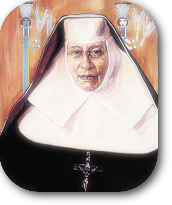


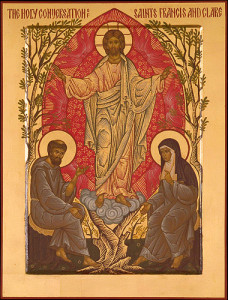


 Photo by Nazim Coskun on Unsplash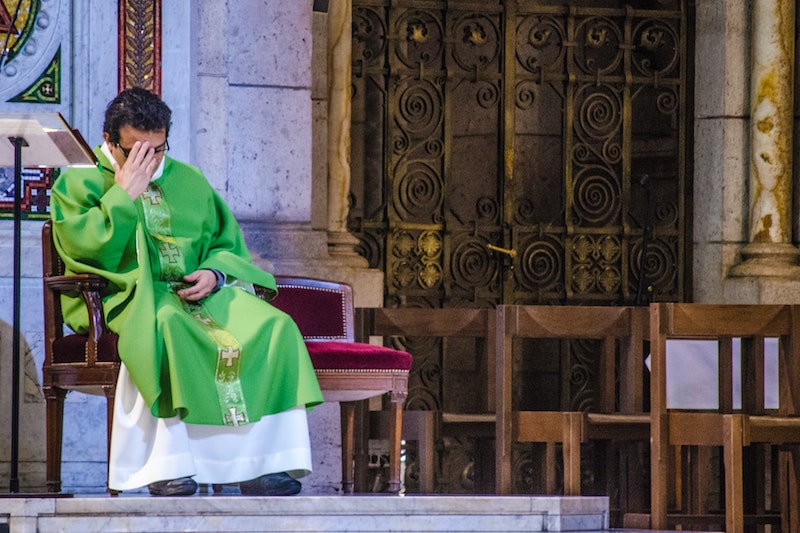
 Comments are closed
