|
|
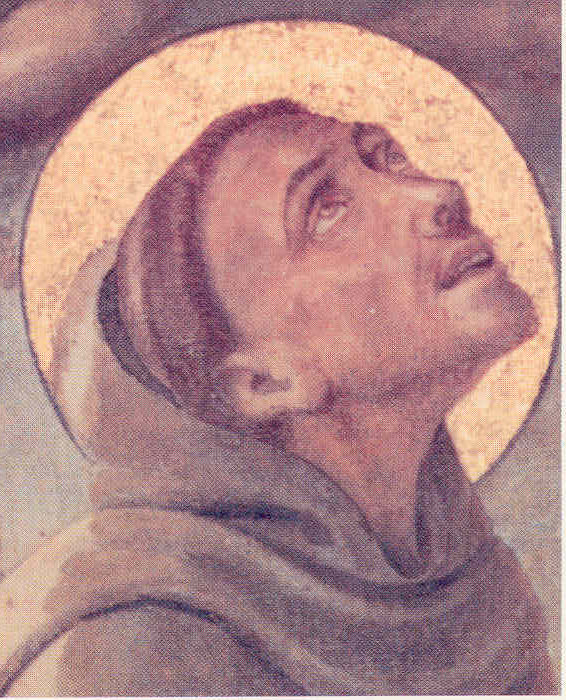
Posted By Teresa Redder, on June 7th, 2015  Many of you are probably aware of The Cord — a scholarly journal of Franciscan studies published by the Franciscan Institute starting in 1950. It was recently reborn as a quarterly called Franciscan Connections – The Cord. Many of you are probably aware of The Cord — a scholarly journal of Franciscan studies published by the Franciscan Institute starting in 1950. It was recently reborn as a quarterly called Franciscan Connections – The Cord.
If you’re interested in a treasure trove of Franciscan thought, you might want to visit the archive of The Core issues from 1950 to 2010 that’s available here. I’m sure you will recognize in these pages many of the authors and scholars found in our OFS our formation materials and many other books and publications.
The May/June 1998 issue (starts on page 55 of the PDF) might be of particular interest as it’s devoted to the 20th anniversary of the Secular Franciscan Rule. It provides some useful perspective on where we are now and where we were in 1998 as well as 1978.
Posted By Teresa Redder, on June 1st, 2015 
June, 2015
Peace to each of your hearts!
On this rainy, damp and somewhat chilly first day of June, it’s a little difficult to take the leap into summer, but the humidity outside reminds that summer is nipping at our heels and ready to provide us with time to rest, relax, and recreate. Hopefully, your schedule will give you an opportunity to enjoy some R&R in the weeks ahead.
Indulge in a little minute meditation and imagine yourself at the beach, listening to the sea crashing against the shore, the constant squawking and screeching of seagulls, the laughter of children around you, the sound of play, the exuberant “Yippee” of a fisherman who has caught his first fish … breathe in the fresh salty air, feel the sand beneath your toes and the soft sea breeze as it brushes across your face. No newspapers, no IPads, no tech gadgets, no cellphones to distract you, just the sea, the sand, the sights, the sounds and you … unplugged and untethered … ah, bliss and unadulterated joy! Now that you’re relaxed, consider these thoughts of our Holy Father, Pope Francis who, in his Apostolic Letter regarding the Year of Consecrated Life, has said,
We are called to know and show that God is able to fill our hearts to the brim with happiness; that we need not seek our happiness elsewhere; that the authentic fraternity found in our communities increases our joy; and that our total self-giving in service to the Church, to families and young people, to the elderly and the poor, brings us life-long personal fulfilment.
None of us should be dour, discontented and dissatisfied, for “a gloomy disciple is a disciple of gloom”. Like everyone else, we have our troubles, our dark nights of the soul, our disappointments and infirmities, our experience of slowing down as we grow older. But in all these things we should be able to discover “perfect joy”. For it is here that we learn to recognize the face of Christ, who became like us in all things, and to rejoice in the knowledge that we are being conformed to him who, out of love of us, did not refuse the sufferings of the cross.
It’s hard to be dour, discontented and dissatisfied while sitting on the beach (or up in the mountains, if you prefer)! Even if life’s circumstances won’t allow for you to travel, you can go to this place of comfort anytime in your mind’s eye, and allow the Lord to fill your heart to the brim with happiness. He has so much in store for you and asks no more of you than that you rest, relax and trust in Him.
Peace, all good, and much love,
mattie
Posted By Teresa Redder, on June 1st, 2015 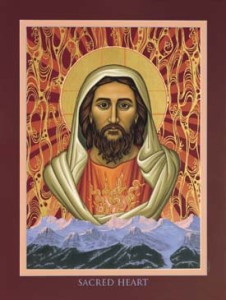
June, 2015
Dear Sisters and Brothers in St. Francis,
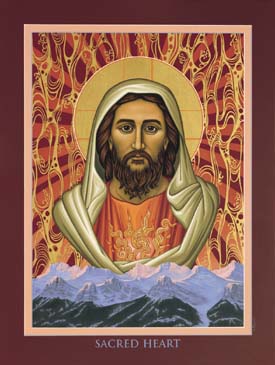
In the Sacred Heart of Jesus, through the Immaculate Heart of Mary, may you enter the loving embrace of the Eternal Father Whose Holy Spirit fills us with Life and Love!
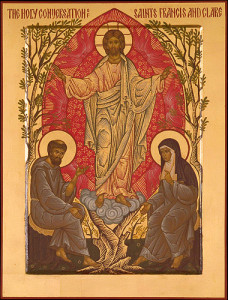
The month dedicated to God’s Love for us in the image of the Sacred Heart of Jesus, offers us an opportunity to reflect on the words attributed to our Seraphic Father St. Francis of Assisi: Love is not loved. Love is not loved! One of the main elements of our Franciscan Vocation is our call to be brother and sister to one another… To love one another. We are called to remember, as St. Francis reminds the Family in the First Rule: As a mother loves her child in the flesh, how much more must we love one another in the Spirit? This kind of “love” is not some fuzzy feeling we look for, but a concrete expression that manifests itself in the way we live and treat one another, and all creation. It is expressed in how we view our vocation. Thus it conditions how we understand our relationship with those who have committed themselves with us to the Franciscan charism.
We have promised to live the Gospel life concretely. Most religious communities have based their charism on either some aspect of apostolic life or some spiritual aspect of the life of the early church. As Franciscans we have promised to live the Gospel life. The Gospel life lived by Jesus and His disciples gathered with Him while He still walked among us as a human being. His disciples followed Jesus wherever He went, they listened to His words, they spoke in His name, they even performed miracles in His name. While it took some time, and Jesus’ trust in them and patience with them, they eventually worked at making their human differences not be a stumbling block but a stepping stone for them to strengthen the bond among them. This had become so obvious, that the early church would hear non-Christians say: See how they love one another (cfr. John 13: 35; Tertullian).
There is never a time when we can say that we have “done it all”, and that there is no more for us to learn or do. We are bombarded with information all our lives. How we understand and learn from our experiences will determine how we become and are bettered or worsened. This is how information leads to formation. We process and often are assisted to build on our experiences and knowledge. For this reason the Regional Council, as all of the Councils of the Order at all levels of the various Obediences (I, II, III Regular, Secular) are constantly hammering away at the sisters and brothers of our Franciscan Family to deepen their Franciscan charism by deepening their relationship with God and their greater awareness, understanding, appreciation, and living out of our Franciscan vocation.
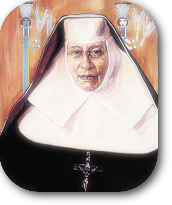
Our Regional Ministers together with the Councils that have ministered to our sisters and brothers in their various triennia of service to the O.F.S. Region of St. Katherine Drexel have continually urged all the fraternities to reflect upon our common vocation to the Gospel Life as Franciscans. Unfortunately, too many of our professed sisters and brothers often have a confused understanding of what it means to live our Franciscan life. Some view the Secular Order as a social club, parish society, “happy death” society. Many have acted as though the fraternity was a stepping stone for some sense of personal advancement rather than opportunity for greater service to others. Knowledge of our Franciscan charism is relegated to the obligatory formation period before profession, afterward, there is “no more need for formation”; there is nothing more distant from the truth!
The following are a few comments worthy of reflection, and there are many more that follow from these. These are not personal observations. These comments and/or observations have continually been vocalized because of some basic misconceptions some Franciscans (including to a greater degree our own Seculars) have regarding the sisters and brothers of the Secular Franciscan Order.
∙ The Secular Franciscans do belong to an “Order”.
∙ The Secular Franciscans are an effective branch of the worldwide Franciscan Family.
∙ The Secular Franciscans are expected to recognize all professed members as “family” and even those in process of acceptance as worthy of our love and support.
∙ The Secular Franciscans are not just encouraged but expected to continue their personal and collective formation through prayer, study, sharing, ministries to others, and so forth.
∙ The Secular Franciscans are called to a deeper relationship with God and one another…and so much more.
In view of the above statements and so many more we have heard concerning our Franciscan vocation, please consider the following paragraphs. They are taken from the Minister General of the Capuchin Franciscan Family (though other Ministers have written similar words to their respective obediences), and our Holy Father Pope Francis, and are offered for your reflection. Where necessary for the sake of adaptability and better understanding of their reference to our Franciscan Secular Family, some words or small phrases have been adapted. The essence of the two messages is the same; the words were adapted to our Secular Franciscan reflection.
I ask that the sisters and brothers of our Secular Franciscan Family take time out of each day to read and reflect upon the Rule and Constitutions of the Order, as well as the writings that speak of our life. The responsibility of this ongoing formation process is not left solely to the elected leaders of the Region and local ministers, but it is also the personal responsibility of each sister and brother. When you gather together for your monthly meeting, talk, dialogue, and discuss points of our Franciscan charism or teachings of the Magisterium. During the days between meetings, be excited about who we are and seek to deepen your awareness and love for the Order. Your identity and sense of belonging can be a valuable topic for discussion and dialogue in the ever present duty we have for continuing our formation, not necessarily as students in a classroom as much as sisters and brothers in a family whose roots, ancestors, hopes, fears, goals, visions are an exciting incentive that urges you to build on the information you receive and grow in the formation of your Franciscan Character.
- What, in your opinion, are the elements that make up our Franciscan identity that have the greatest priority in the current situation of our Order, in your personal life, and in the social and cultural environment in which you live? How does it affect you? How do you affect the world around you? What makes you say this?
- Regarding the sense of belonging, what are the greatest difficulties you experience in believing and feeling a sense of belonging to a “family”, the Franciscan Family? If you experience no difficulties, why? Does your biological family encourage and support you? Are family and friends a reason or an excuse for not fully living, every day, your commitment to our charism as seculars? Is there a spirit of transparency, based on trust, among the sisters and brothers? Are there other areas that affect a sense of belonging that you believe must be addressed in your own life and/or in that of your fraternity?
- What are the most important things that need to be done in your fraternity to reinforce your identity as Secular Franciscans and the sense of belonging to the Order?
Having read the above, take time, please, to reflect on the words that Pope Francis addressed to the Conference of Superiors on November 29, 2013. Let us challenge ourselves, without fear, to convert our attitudes, our mentality, and our affections to Him who, by letting us share in the charism of St. Francis, has prepared for us a path of holiness that if traveled, will bring our existence to its fulfillment.
“Wake up world! Be witnesses of a different way of doing, of acting, of living! It is possible to live differently in this world. We are speaking of an eschatological gaze of values of the Kingdom incarnate here, on this earth. It is about leaving everything to follow the Lord. You must be true witnesses of a different way of behaving. But in life it is with difficulty that everything becomes clear, precise, and precisely drawn. Life is complex, made of grace and sin. We all err and must recognize our weakness. A religious (also a Secular Franciscan) that recognizes himself (or herself) as weak and a sinner does not contradict the witness he/she is called to give, but rather reinforces it, and this does good for all. What I expect then is witness, I want … this special witness” (Pope Francis with the Superiors General, 4 January 2014).
We speak of our Franciscan charism as being a call to the Gospel Life. The Gospel Life is one lived in proximity to others and with others and for others. Like any life, it is prone to change and challenges. The only way we can grow through the gifted experience of our Franciscan vocation is by loving it enough to live it each day with an open heart and mind.
In the spirit of our Seraphic Father St. Francis of Assisi, let us take that first step on our daily pilgrim journey. As Saint Francis said to his first followers as he lay dying, I have done my part, now you must do yours . We are our St. Francis’ “backup plan”. He expects us to continue the mission to continue to make the Gospel come alive in the world. As we move forward on our pilgrim journey, we will touch the lives of many according to how we live our own. May our Heavenly Mother Mary accompany us on this journey. May She lead all people to Our Lord Jesus Christ Her Son. With Mary as “pilgrim mother” on the journey with us, let us live and accept the challenge to join the band of Gospel pilgrims who journey through life to Life.
May God bless you; Our Lady guide, guard, and protect you; and our Seraphic Father St. Francis of Assisi watch over each one of you, his Spiritual Children, with loving care. In the Love of the Sacred Heart of Jesus and the Immaculate Heart of Mary, I pray that Jesus bestow on all of you and your loved ones…
Peace and Blessings
Fr. Francis A. Sariego, O.F.M. Cap.
Regional Spiritual Assistant
Posted By Teresa Redder, on June 1st, 2015 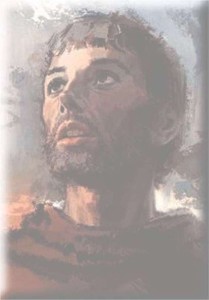 June 2015 June 2015
O loving one
bear in mind your poor children for whom, without you,
their one and only consolation, there is little comfort…
they still .. tearfully cry out to you: O father,
place before Jesus Christ, son of the Most High Father,
His sacred stigmata;
and show Him the signs of the cross on your hands, feet, and side,
that He may mercifully bare His own wounds to the Father,
and because of this the Father will ever show us in our anguish
His tenderness.
Amen.
(Prayer to St. Francis from the End of the Second Book of the Life of St. Francis by Bl.Thomas of Celano)
Following are excerpts taken from The Assisi Compilation. Daily meditative phrases taken from words of Pope St. John Paul II
1
(Francis’) opinion was that rarely should something be commanded under obedience, for the weapon of last resort should not be the first used. – Jesus’ way of acting and his words, his deeds, and precepts constitute the moral rule of Christian life.
2
Saint Francis also said: A time will come when the religion loved by God will have such a bad reputation because of bad example that it will be embarrassing to go out in public. – Love and follow Christ!
3
Know that you are in truth my servant when you think, speak, and do all things that are holy. – If the path becomes difficult at times and you are overcome by fatigue, rest in the shade of prayer.
4
While he was staying in that palace (of the bishop), blessed Francis, realizing that he was getting sicker by the day, had himself carried on a litter to the church of St. Mary of the Portiuncula. – Have great love for Jesus Christ, try to know him well, remain united to him, have great faith and great trust in him.
5
Raising himself up slightly on the litter, he blessed the city of Assisi: … May (Assisi) always be mindful of the abundant mercies which You have shown it, that it always be an abode for those who acknowledge You, and glorify Your name blessed and glorious throughout the ages. Amen. – Be generous in giving you life to the Lord.
6
From the time of his conversion till the day of his death, blessed Francis, whether healthy or sick, was always concerned to know and follow the will of the Lord. – You have nothing to fear, because God is the Lord of history and of the universe.
7
Although racked with sickness, blessed Francis praised God with great fervor of spirit and joy of body and soul, and told (one of the brothers): If I am to die soon, call Brother Angelo and Brother Leo that they may sing to me about Sister Death. – The more ready you are to give yourselves to God and to others, the more you will discover the authentic meaning of life.
8
(Lady Jacopa) That spiritual woman was a holy widow, devoted to God …Through the merits of blessed Francis she had obtained such grace from God that she seemed like another Magdalene, always full of tears and devotion for love of God. – God expects much of you!
9
From the beginning of his conversion blessed Francis, with God’s help, established himself and his house … upon a firm rock , the greatest humility and poverty of the Son of God, calling it the religion of ‘Lesser Brothers’. – Life is a gift from the Creator, to be spent in the service of one’s brothers and sisters.
10
The bishop of (Terni) … attended that sermon (of blessed Francis in Terni) … he said: … in this final hour, God has beautified his Church with this little poor man, lowly and unlettered … pointing all the while to blessed Francis. – (Life) is to be accepted, respected, and proposed with every means available, and defended from every threat.
11
To preserve greater humility, a few years after his conversion he resigned the office of prelate before all the brothers during a chapter held at Saint Mary of the Portiuncula. From now on I am dead to you. But here is Brother Peter di Catani: let us all, you and I obey him. – Recognizing Christ in our brethren, we are preparing to be recognized by him at his final return.
12
Considering the outstanding perfection of Brother Bernard, blessed Francis prophesied about him in the presence of some of the brothers: I tell you some of the greatest and most cunning devils have been sent to test Brother Bernard … The merciful Lord will deliver him … He will place his spirit and body in such peace, quiet, and consolation … and in this consolation of both body and soul, he will pass from this world to the Lord. – The Christian community prepares for the Lord’s second coming by focusing on those persons whom Jesus himself favored, those who are often excluded and ignored by society.
13
During the week in which blessed Francis died, Lady Clare was seriously ill…She sent word of this to blessed Francis…To console her, he wrote his blessing in a letter and also absolved her from any failings, if she had any…He spoke to the brother she had sent. Go, and take this letter to Lady Clare…Let her be assured that before her death, both she and her sisters will see me and will receive the greatest consolation from me. – Let us lift our gaze from pettiness and sin, and let us contemplate in heaven the throne of the Lamb, where the eternal liturgy of praise is chanted by men and women of every people and race.
14
Saturday evening before nightfall, after vespers, when blessed Francis passed to the Lord, many birds called larks flew low above the roof of the house where blessed Francis lay, wheeling in a circle and singing. – Be an encouragement always to walk in accordance with the Spirit of the risen Jesus, a support in adhering to God’s will … be generous witnesses of Christ’s love.
15
Concerning larks, blessed Francis used to say: Our Sister Lark, has a capuche like a religious, and is a humble bird, who gladly goes along the road looking for some grain. Even if she finds it in animal’s manure, she pecks it out and eats it. While flying, she praises the Lord… – ‘Reparation’ … is … returning to the Lord, touched by his love, and offering a more intense fidelity in the future, a life aflame with charity.
16
Blessed Francis often said these words to the brothers: I have never been a thief, in regard to alms, which are the inheritance of the poor. I always took less than I needed, so that other poor people would not be cheated of their share. To act otherwise would be theft. – To follow Jesus involves living as he lived, accepting his message, adopting his way of thinking, embracing his destiny, and sharing his project, which is the plan of the Father
17
The voice of Christ was heard in the air, saying: Francis, nothing of yours is in the Rule. Whatever is there is all mine. And I want the Rule observed in this way: to te letter, to the letter, to the letter, and without gloss, without gloss, without gloss … Those who refuse to observe it should leave the Order … – Without the spiritual nourishment that the body and blood of Christ gives us, human love is always tainted by selfishness.
18
(At the Chapter of Mats, in the presence of the Lord Cardinal who later became Pope Gregory, Francis said): My brothers! My brothers! God has called me by the way of simplicity and showed me the way of simplicity. I do not want you to mention any other Rule … And the Lord told me … He wanted me to be a new fool in the world … – Christians must feel compelled to take the initiative and to reach out to their brothers and sisters where they live and work.
19
Know then, brothers, that the profit or good of souls is what pleases God the most, and this is more easily obtained through peace with the clergy than fighting with them … Be subject to prelates so that, as much as possible on your part no jealousy arises. If you are children of peace, you will win over both the clergy and people for the Lord … – It is every believer’s duty to take part in building up society, putting himself at the service of his brothers and sisters through the search for the common good.
20
For my part, I want only this privilege from the Lord: not to have any privilege from any human being, except to show reverence to all, and, by the obedience to the holy Rule, to convert everyone more by example than by word. – If we wish to welcome the Lord, we are called to conversion.
21
One night blessed Francis was so afflicted with the pains of his illness … he had all the brothers staying in that place called to him … he regarded them as representatives of all the brothers … he blessed them, placing his right hand on the head of each one, and he blessed all who were in the religion and all who were to come until the end of the world. – Constant fidelity to legitimate authority and institutions … serve not power but the supreme ideal of justice.
22
He did not want the brothers to live in any place unless it had a definite owner who held the property rights. He always wanted to have the law of pilgrims for his sons. – The message of conversion and reconciliation as an indispensable demand of Christian love is more urgent than ever in present-day society, in which the very foundations of an ethical vision of human life often seem lost.
23
He hated pretense in houses … abhorred having many or fine furnishings … disliked anything … that recalled the ways of the world. He wanted everything to sing of exile and pilgrimage. – Prepare the way for Christ by the testimony of his word and his life.
24
He taught that in books the testimony of the Lord, not value, should be sought, edification rather than elegance. He wanted few books kept, and these should be available to the brothers who needed them. – Imitate (Christ) with docile and trusting generosity.
25
Finally, beds and coverings abounded in such plentiful poverty that if a brother had a ragged sheet over some straw he considered it a bridal cloth. – The glory of God is man fully alive (St.Irenaeus). Here is the truth about the glory of God which the gospel offers us!
26
He detested money above all … and encouraged his followers to flee from it always as from the devil himself. He gave his followers this observation: money and manure are equally worthy of love. – The mysterious route of faith and love … is a model of the journey that every Christian is called to accomplish to witness Christ in the world.
27
Clothed with power this man was warmed more by divine fire on the inside than by what covered his body on the outside. – In order to love as Jesus loves, we must offer others the gift of ourselves.
28
(Blessed Francis) said: A time will come when strictness will be relaxed, and tepidity will hold such sway, that sons of a poor father will not be the least ashamed to wear even velvet cloth, just changing the color. – It is in the giving of ourselves through charity, service, and compassion that we can experience true joy.
29
(St. Francis said to a man who was cursing his lord for taken what was his) Brother, forgive your lord for the love of God, so you may set your soul free, and it may be that he will return to you what he has taken. Otherwise you will lose not only your property, but also your soul. Blessed Francis gave him the mantle on his back, and said, Here, I will give you this cloak, and beg you to forgive your lord for love of God. The man’s mood sweetened and moved by his kindness, he took the gift and forgave the wrongs. – Suffering is transformed and elevated when, in those moments, we become aware of God’s closeness and solidarity.
30
(Speaking with a learned Dominican about warning the wicked of their wickedness, blessed Francis said): … a servant of God should be burning with life and holiness so brightly, that by the light of example and the tongue of his conduct, he will rebuke all the wicked … the brightness of his life and the fragrance of his reputation will proclaim their wickedness to all of them. – Each one is tempted by unbelief. We have to open our eyes and our heart to the light of the Holy Spirit.
Posted By Teresa Redder, on June 1st, 2015 Pope Francis on the Eucharist![2845_250[1]](http://www.skdregion.org/wp-content/uploads/2845_2501-150x150.gif)
The Eucharist: Source and Summit of the Church’s Life
In his recent series of teachings on the Sacraments of the Church, Pope Francis dedicated two Wednesday audiences and a homily to exploring the nature the Eucharist, its centrality to the Church’s very identity, its application in our lives, and how the celebration of the Eucharist rediscovers and revitalizes the “sense of the sacred.”
“In the Eucharist, Christ is always renewing His gift of self, which He made on the Cross,” the pope said. “His whole life is an act of total sharing of self out of love.”
“It is so important to go to Mass on Sunday,” Pope Francis spontaneously added to the text of his February 5 audience, “not just to pray, but to receive Communion. It is a beautiful thing to do,” he said, for Sunday is “precisely the day of the resurrection of the Lord. That is why Sunday is so important to us.”
Rediscover a “Sense of the Sacred” at Mass
February 10 Homily Excerpts
The first Reading of the day speaks of the “theophany” of God in the time of Solomon the king. The Lord came down like a cloud upon the temple, which was filled with the glory of God. The Lord, the pope said, speaks to His people in many ways: through the prophets, the priests, the Sacred Scriptures. But with the theophanies, He speaks in another way, “different from the Word: it is another presence, closer, without mediation, near. It is His presence.” This, he explained, happens in the liturgical celebration. The liturgical celebration is not a social act, a good social act; it is not a gathering of the faithful to pray together. It is something else. In the liturgy, God is present,” but it is a closer presence. In the Mass, in fact, “the presence of the Lord is real, truly real.”
“When we celebrate the Mass, we don’t accomplish a representation of the Last Supper: no, it is not a representation. It is something else: it is the Last Supper itself. It is to really live once more the Passion and the redeeming Death of the Lord. It is a theophany: the Lord is made present on the altar to be offered to the Father for the salvation of the world. We hear or we say, ‘But, I can’t now, I have to go to Mass, I have to go to hear Mass.’ nto the mystery of God, to allow ourselves to be brought to the mystery, and to be in the mystery,” he said. We are all “gathered here to enter into the mystery: this is the liturgy. It is God’s time, it is God’s space, it is the cloud of God that surrounds all of us. To celebrate the liturgy is to have this availability to enter into the mystery of God,” to enter into His space, His time, to entrust ourselves to this mystery.
Pope Francis concluded, “We would do well today to ask the Lord to give to each of us this The Mass is not ‘heard,’ it is participated in; and it is a participation in this theophany, in this mystery of the presence of the Lord among us.”
Nativity scenes, the Way of the Cross… these are representations. The Mass, on the other hand, “is a real commemoration, that is, it is a theophany: God approaches and is with us, and we participate in the mystery of the Redemption.” Unfortunately, too often we look at the clock during Mass, “counting the minutes.” This, the pope said, is not the attitude the liturgy requires of us: the liturgy is God’s time, God’s space, and we must place ourselves there: in God’s time, in God’s space, and not look at the clock.”
“The liturgy is to really enter into the mystery of God, to allow ourselves to be brought to the mystery, and to be in the mystery,” he said. We are all “gathered here to enter into the mystery: this is the liturgy. It is God’s time, it is God’s space, it is the cloud of God that surrounds all of us. To celebrate the liturgy is to have this availability to enter into the mystery of God,” to enter into His space, His time, to entrust ourselves to this mystery.
Pope Francis concluded, “We would do well today to ask the Lord to give to each of us this ‘sense of the sacred’ — this sense that makes us understand that it is one thing to pray at home, to pray in Church, to pray the Rosary, to pray so many beautiful prayers, to make the Way of the Cross, so many beautiful things, to read the Bible — [but] the Eucharistic celebration is something else. In the celebration we enter into the mystery of God, into that street that we cannot control: only He is the unique One — the glory, the power — He is everything.
“Let us ask for this grace: that the Lord would teach us to enter into the mystery of God.”
Saint Francis in his Admonition 1 – “As He revealed Himself to the holy apostles in the true flesh, so He reveals Himself to us now in sacred bread. And as they saw only His flesh by an insight of their flesh, yet believed that He was God as they contemplated Him with their spiritual eyes. let us, as we see bread and wine with our bodily eyes, see and firmly believe that they are His most holy Body and Blood living and true.
Let us pray as Saint Francis “My God and my all”
Peace and every good,
Rosie
Posted By Teresa Redder, on May 2nd, 2015 ![mm6[1]](http://www.skdregion.org/wp-content/uploads/mm61-150x150.jpg)
Dear Sisters and Brothers in St. Francis,
PEACE to each of your hearts!
(St. Francis) was called by the Lord to a unique grace of friendship. Through his prayers he found the Rule of the Lesser Brothers, and when he lost it he returned to the mountain (as Moses had done with the Tablets of the Law) where he had found it and prayed again … there … by divine revelation and through the power of prayer, he found the lost rule. And it was confirmed for him.
Fr. Francis Sariego, OFM Cap, one of our dear Regional Spiritual Assistants, shared this wisdom with us two years ago. As we reflected on this wisdom together, we hoped that we could return to the mountain where we first embraced our Rule and the gift and commitment that was … and is … our Profession and, in so doing, remind ourselves of what it meant to truly be brother and sister to one another.
We are gratified by the response we are receiving to our upcoming Regional Retreat at the end of this month and we hope it will be a time when each of us can rest, relax and reflect on our call as Secular Franciscans and our individual and collective response to that call.
During this month set aside for particular devotion to Our Blessed Mother, let us pray to Her for inspiration and guidance. We look forward to being with you in Easton.
T T T T T T T T T T T T T T T
Two of our Regional Fraternities will be celebrating significant anniversaries this year: Holy Cross (100 Years of Canonical Establishment) and Queen of the Universe (50 Years of Canonical Establishment)! We thank God for the GIFT of these Fraternities and for the faithfulness of each of our sisters and brothers to their Secular Franciscan vocation.
In October, 2015, our National Fraternity Council will be electing new Councillors to the National Executive Council. We ask you please to hold this Chapter in your prayers.
Although we didn’t enjoy a snowy winter in 2015, we did have some nasty weather which caused disruption to local fraternity as well as regional calendars. The “upcoming events” section of our Regional Website has been updated to reflect the changes which needed to be made.
Blessings, every good, and much love,
mattie
Posted By Teresa Redder, on May 2nd, 2015 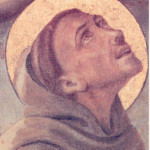 Dear Brothers and Sisters, Dear Brothers and Sisters,
In the beautiful prayer Saint Francis wrote in a letter to the Order we can see the three essential steps in our spiritual life which Francis himself embellished. This prayer can be found in our Ritual on page 36 that is our Closing Prayer.
As we grow in relationship with Christ we begin to understand the mysteries of our faith beginning with the purgative way which is a purification, a self emptying. This does not happen through our own efforts but only by the grace that God gives to us.
As we descend, we arise to an awakening to a deeper level of our faith to the illuminative way in which we meet Christ in a more personal way. We address our moral way of life and overcome that barrier and surrender ourselves to our loving Lord. We then ascend and decrease in our driven needs to the unitive way.
Almighty, just and merciful God, addresses God and describes our spiritual life. It teaches us mercy. We will be opening the door of Mercy this year on December 8th.
Grant us in our misery…… We are in a miserable state, darkened emotions. A need for reparation.
And always want what pleases you…..”If you love me keep my commandments.”
So that cleansed and enlightened interiorly….the purgative way
And fired with the flame of the Holy Spirit purgation, conversation of the will.
You who live and rule in perfect Trinity and simple Unity…unitive way
Let us pray,
Almighty, and eternal, just and merciful God:
Grant us in our misery that we may do for your sake alone what we know you want us to do, and always want what pleases you; so that cleansed and enlightened interiorly and fired with the flame of the Holy Spirit, we may be able to follow in the footsteps of your Son, our Lord Jesus Christ, and so make our way to you, Most High, by your grace alone , you who live and rule in perfect Trinity and simple Unity, and are glorified, God all powerful, forever and ever. Amen.
Peace and every good,
Rosie
Posted By Teresa Redder, on May 2nd, 2015 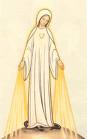 Dear Sisters and Brothers in St. Francis, Dear Sisters and Brothers in St. Francis,
The Lord grant you His Peace, the Life-giving Gift of the Holy Spirit
The world is ever going through its millennial “growing pains”. We have been facing a tragic reality for a number of months. Extremists in the name of God are killing hundreds of our sisters and brothers in Christ, because they are of Christ. Talks, sanctions, military threats, open combat are only a few of the tactics employed to defuse and destroy the “enemy at the gates”. Have we forgotten that God must be a part of our response to evil that attacks us? Have we forgotten that Mary has and is still offering us a Plan from Heaven to win this and other battles that aim at destroying all we hold dear and in Whom and which we believe.
For centuries the great saints have taught us of the almighty intercession of Mary. Accepting us as Her children at the foot of the Cross of Jesus, she intercedes for us and accompanies us. She has promised so many times that her Immaculate Heart will ultimately win out and Jesus will again reign in our troubled world. Why are we so hesitant to publicly acclaim our Mother consecrating ourselves to her and universally implore her Son to come to our aide? The prayer we so often pray calling to mind the Incarnation of Jesus and Mary’s willingness to cooperate with the Will of the Father has been the “spiritual weapon” prayed by saints and sinners, Catholics and even non-Catholics. When prayed in the Rosary remembering Mary’s role in the History of our Salvation we enter a relationship with Jesus through Mary. Great saints have considered this prayer the one that “turned the tide” of events and brought peace to the Church, the known world at the time, a nation, a city, a person, or brought healing to the sick and infirm, stopped the progress of a plague, and so much more.
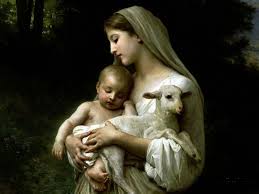
May is the month dedicated to Our Blessed Mother Mary. It is almost universal in the Church that we Roman Catholics recite the “Hail Mary” everyday. Let us focus on this simple, brief, and beautiful prayer. Let us reflect on the words and ask Our Blessed Mother Mary to open our hearts as hers was that we may accept God’s Will and “give rebirth” to Jesus in this world so much in need of the Savior.
Hail Mary: At the beginning of the prayer, we can put ourselves in the frame of mind to talk to our Blessed Lady and Mother. We can do so because she is the Mother of Jesus and the Queen of Heaven. Our Lord Jesus, her loving Son, wants us to go to her. Remember the words from the Cross that were addressed to the Apostle John: Son, behold your Mother (John 19: 26). In John we accept Mary as our Mother and she accepts us as her children. From the side of Jesus opened for us by the soldier’s lance flowed the Saving Blood of Sacrifice. In that Blood we are redeemed. Mary becomes the Mother of all the redeemed and accompanies us through life. We greet Our Lady personally as one of her loving children. Prayer is not simply the saying of words in a formula, but a personal encounter in which we converse – primarily with God, but also with, Our Lady, St. Joseph, the angels, the Saints, the holy Souls, and so on. Our love and friendship with them in the Communion of Saints grants serenity and confidence in the words that follow.
Let us imagine ourselves bowing with the deepest respect before our Queen and Mother as we try to imitate the reverence shown to her even by such a great being as the Archangel Gabriel who bore the undescribably awesome message of God entering time. With a simple “Hail” to Mary her attention is focused on what is to follow. We know that if we are sincere, we will not be held at fault for our clumsiness or lack of knowing how we should speak properly. Our Lady listens with great kindness and attention to our humble words, as a loving mother.
Full of grace: Our Lady is sinless and perfect. This does not distance her from us. On the contrary, it makes Mary the perfect friend for us. Mary is someone who is always seeking our good. She will speak in the name of a “humanity in waiting”. Though we are not born “full of grace” but the contrary is fact, God loves His creation. Our own faults and sins sometimes make us ashamed or fearful of God. The eternal Father offers us Mary who is so much superior to us in holiness and goodness and that very goodness is itself a guarantee of her graceful understanding…and “almighty intercession” before the Father, Son, and the Holy Spirit. Such holiness in Our Lady does not accept any offense against the Love of God. However, like a good mother, she knows that temptations prevail, and sins exist. Our love for her and her intercession for us, her children born from the side of her Son Jesus on the Cross, encourage us to repentance. She guides us to seek God’s mercy and grace in the Sacrament of Reconciliation, and does not despise us. The very thought of Mary can help us to resist temptation, avoid sin, and what leads us to it.
The Lord is with thee: Our Lady was constantly listening to God and His voice in her heart. He was with her by grace but this was an active presence, an exchange in which she was in continual peace and companionship with God. Even when distracted by worldly chores and business, God’s presence was the backdrop of her life. Our Lady followed her conscience – remember, however, that her conscience, unlike ours, was perfectly formed. Not only was she instructed in the law of God, her judgements on what to do here and now were unsullied by that self-seeking and inclination to our own desires that mark our own struggles to choose what is right and good. The Lord wishes also to be with us, not only at our fixed times of prayer or in the Church itself, but at all times as He is always present whatever we do, wherever we are. The Hail Mary can remind us of this constant truth that God is indeed everywhere, and is always with us.
Blessed art thou among women: St Elizabeth immediately recognized Our Lady’s greatness when she came to visit her after being told of her relative’s unique vocation as mother of the forerunner of the Savior by the angel Gabriel. Her humble response to Mary’s visit is immortalized in this simple prayer we recite everyday: who am I that the Mother of my Lord should come to me? (Luke 1: 43) At the same time, St John the Baptist leapt in her womb – an unborn child making an act of faith in the presence of his cousin as an embryo of only a few days implanted in the womb of the Blessed Virgin. The recognition of these great saints teaches us the fundamental reason why we give so much honour to Our Lady. She carried God the Son in her womb for nine months and was chosen for the supreme privilege of nursing and nurturing Him in His childhood. If we really reflect on this great truth, played out on the world of whose history we are a part with her, we can only bow down in love and awe at the greatness of this woman who acknowledged in humility, All generations shall call me blessed (Luke 1: 48).
Blessed is the fruit of thy womb: Mary leads us always to Christ. It is one of the saddest mistakes of those who oppose our special love and veneration for Mary to think that somehow Our Lady detracts from our devotion to Jesus Christ. On the contrary, she draws us to Him, shows Him to us, and teaches us how to be His disciples. If sometimes we find that we are distracted at Mass, it is a sure way back to true devotion to ask the assistance of Our Lady to help us to make our own offerings at Mass, of adoration, thanksgiving, sorrow, and petition for the grace of God. This is also true for the priest. He can ask for no greater assistance in His attempts to celebrate the Eucharist with due reverence and devotion than to ask the help of that holy Mother who stood at the foot of the Cross and can guide him at the altar. She is Mother of all priests, as She is Mother of the Great High Priest in Whose name each priest ministers as an “alter Christus” (“another Christ”). Let us pray for all priests, particularly those who have grown lukewarm – it happens – that Our Lady will set all of us on fire with the genuine devotion of true disciples who will bring Our Lord, blessed fruit of her womb, to others.
Holy Mary, Mother of God: Being the Mother of God is the source of all Our Lady’s other titles. They are not simply nice thoughts but they tell us basic truths of our Faith. Mary also safeguards the truth about Jesus Christ. Because she is the Mother of God, it shows us that he is truly God and truly Man. For this reason, Our Lady has been called the “Destroyer of heresies.” As Mother of the Church, she gives her protection to those who ask for it, and invokes with us the gifts of the Holy Spirit to enable us to believe Christ and preach Christ, the Way, the Truth and the Life. In our secular culture it is easy to be swayed by popular opinion, to water down the teaching of Christ and His Church to make it more acceptable, to avoid arguments or sneering, or to make things easier in our own lives. Our Lady’s total trust in the Father’s Will at the Annunciation and Incarnation, and her fidelity at the Passion can shame us to stand up and be counted, to defend the faith at the cost of ridicule, to be known as disciples of Christ, to be proud to be such – not of course through any self-congratulation considering our weakness, but that legitimate pride in being under the banner of the Cross, of being His men and women.
Pray for us sinners: Our Lady never sinned but she knew more than anyone the damage caused by sin. We call her Co-redemptrix because of her share in the passion of Christ. Her perfection in grace means that she above all is the terror of demons who flee in terror from her very name as exorcists testify. Yet she is also compassionate towards us, who are affected by the wound of original sin, and weighed down by our own past sins and habits of sin. We beg her prayers for us as sinners because they are most powerful, both in helping us to resist temptation and in putting new heart into us when we have fallen. She also knows well the infinite mercy of her Son with whom there is fullness of redemption (cfr. Ephesians 1: 7) and the folly of ever despairing of this mercy.
Now and at the hour of our death: Every Hail Mary is a way of preparing for the time when we pass over from time to eternity. Death is not the loss of life but the entrance to the fullness of Life. This is something we should remember often. The Church in her wisdom has placed this petition at the end of the prayer. Many people live as if death were not a fact of our lives. But our life here on earth is short, we have one soul to save, and an eternity to enjoy the presence of God or to lose Him for ever. Nothing is more important than our eternal salvation. Therefore we ask Jesus, Mary (and let us not forget the silent one of Scripture, St. Joseph) to help us to prepare for our death by a good life. We also pray for a happy death, which means dying in a state of grace, fortified by the sacraments of the Church.
Amen. This word is our act of commitment to all said and our surrender to God through Mary’s intercession.
The Hail Mary is a simple but very rich prayer. We should take a little time – it is after all only a short prayer – to say it more slowly, to savor the sweetness of the words, to ask Our Blessed Mother to grace us with her prayers, and to form us anew as the disciples of her Son, Our Lord Jesus Christ.
Holy Virgin Mary, among the women born into the world,
there is no one like you.
Daughter and servant of the most high and supreme
King and of the Father in heaven,
Mother of our most holy Lord Jesus Christ,
Spouse of the Holy Spirit,
pray for us with Saint Michael the Archangel,
all the powers of heaven and all the saints,
at the side of your most beloved Son, our Lord and Teacher.
As Spiritual Children of St. Francis of Assisi let us follow the example of love our Seraphic Father had for Mary. Let our devotional practices honoring Our Heavenly Mother be the sign of an internal conviction and commitment to a person whose love for us leads us ever more closely to Jesus her Son. TOTUS TUUS! (TOTALLY YOURS!) Let us make this motto of St. John Paul II our motto and live it with trust and joy, knowing that we have a most powerful and loving intercessor before the Most Holy Trinity. As Daughter of the Father, Mother of the Son, and Spouse of the Holy Spirit, Mary, while only human and infinitely less than God who created her, Mary is eminently greater than all of us. Invoke her loving protection and almighty intercession that while living with her in this life, she may intercede for us and assist us on our final journey to eternity and God’s loving embrace.
With every best wish for you during this Easter Season of new birth and new life, I pray we all live as ‘Alleluia People’. Be open to the working of the Holy Spirit. May this Holy Spirit inflame our hearts as He filled Our Mother Mary. May we follow the Spirit’s inspiration and confidently respond, as Mary, and all the Saints, with a determined ‘Yes’ to all the Father asks of us, that we may be more like Jesus.
May God bless you; Our Lady guide, guard, and protect you; and may our Seraphic Father St. Francis of Assisi watch over each one of you, his Spiritual Children, with loving care.
Peace and Blessings
Fr. Francis A. Sariego, O.F.M Cap.
Regional Spiritual Assistant
Posted By Teresa Redder, on May 2nd, 2015 May 2015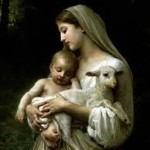
Hail, O Lady, holy Queen, you are the virgin made church
and the one chosen by the most holy Father in heaven
whom He consecrated with His most holy beloved Son
and with the Holy Spirit the Paraclete,
in whom there was and is all the fullness of grace and every good.
Hail, His Palace! Hail, His, Tabernacle! Hail, His Home!
Hail, His Robe! Hail, His Servant! Hail, His Mother!
And hail all you holy virtues which through the grace and light of the Holy Spirit
are poured into the hearts of the faithful so that from
their faithless state you may make them faithful to God.
(Salutation of the Blessed Virgin)
Following are excerpts taken from various Franciscan writings. Daily meditative phrases from various Sources.
1
It was not that he was a man who prayed, than he himself was a living prayer. – Abraham hoped everything would stay put, but he left everything and everyone on God’s word and traveled into the unknown.
2
His sure harbor was prayer not for a moment, … but profoundly devout, humble and prolonged as much as possible. If he began at night, with difficulty he ended his prayer in the morning. – Like Abraham, we are sustained by not simply a promise, but by the Promise of God which was fleshed out in Jesus.
3
Often, almost daily, he withdrew secretly to pray. He was inclined to do so by that same tenderness he had tasted earlier, which now visited him ever more frequently, driving him to prayer in the piazza and in other public places. (Three Companions, chpt.3) – Moses longed to see his dreams completed and stopped short of the land he was allowed to see but not enter.
4
Francis … totally unaware of earthly desires through love of Christ, and strove to keep his spirit present to God by praying without ceasing lest he be without them consolation of the Beloved. (Major Legend, chpt.10) – It was enough for Moses to be given evidence of the future to die fulfilled and in peace.
5
The man of God gathered with his companions … they spent their time praying incessantly, directing their efforts mentally rather than vocally to devoted prayers, because they did have liturgical books from which to chant the canonical hours. (Major Legend, chpt.4) – Joseph, in spite of the rough breaks he had experienced since being sold by his brothers, refused to quit.
6
Let all the brothers always strive to exert themselves in doing good works … Servants of God, therefore, must always apply themselves to prayer or some good work. (Earlier Rule, chpt.7) – God intends you to be the person on whom He has conferred a unique ‘personhood’. God has committed Himself to you…agree to do the same to Him.
7
Let us always make a home and a dwelling place for Him Who is the Lord God Almighty, father, Son and Holy Spirit, Who says: Be vigilant at all times and pray that you have the strength to escape the tribulations that are imminent … When you stand to pray say: Our Father in heaven. (Earlier Rule, chpt.22) – David wanted to build a monument to God but had to prepare the material for another to build.
8
Those brothers to whom the Lord has given the grace of working may work faithfully and devotedly so that, while avoiding idleness, the enemy of the soul, they do not extinguish the Spirit of holy prayer and devotion to which all temporal things must contribute. (Later Rule, chpt.5) – You who are meant to be part of God’s family, are one of the community of the Crucified One; you too must crucify self and forget ego trips…Trust Him!
9
I admonish and exhort the brothers in the name of the Lord Jesus Christ to … pay attention to what they must desire above all else: to have the Spirit of the Lord and Its holy activity, to pray always to Him with a pure heart, to have humility and patience in persecution and infirmity. (Later Rule, chpt.10) – Elijah was so demoralized he wanted to give up, but God knew the inner strength of Elijah and gave him a firm ‘no’.
10
I am pleased that you teach sacred theology to the brothers providing that, as is contained in the Rule, you do not extinguish the Spirit of prayer and devotion, during study of this kind. (Letter to St. Anthony) – There is no permanent retirement for a Christian, only temporary respites from time to time to rest and reequip.
11
Francis used to say that, because of the office of prelacy or of zeal for preaching, they should not abandon holy and devout prayer, going for alms. Working at times with their hands, and performing other humble tasks like the other brothers, for good example and for the benefit of their souls, as well as others. (Mirror, chpt.73) – Jonah tried to run away from God’s Will and acceptance of his responsibilities, but he couldn’t run from God.
12
He said that (ministers of the word of God) were heralds chosen by a great king…For he used to say: The preacher must first secretly draw in by prayer what he later pours out in sacred preaching; he must first of all grow warm on the inside, or he will speak frozen words on the outside. (2Celano, chpt.122) – God still replies in the negative to those who claim a special relationship, but try to escape from responsibilities, or fall into a narrow, self-centered outlook.
13
(Description of General Minister) … He must be a committed friend of holy prayer, who can distribute some hours for his soul and others for the flock entrusted to him … (2Celano, chpt.139) – Job questioned God and demanded answers, but God gave him no answers; His questions were more profound and penetrating.
14
They never or hardly ever stopped praying and praising God…They gave thanks to God for the good done…They would have thought themselves abandoned by God if they did not experience in their ordinary prayers that they were constantly visited by the spirit of devotion. (1Celano, chpt.15) – We present-day Jobs also are promised God’s sufficiency. He gives more than answers … He shares His life with us.
15
They were so devoted to prayer that there was no hour of the night that someone could not be found at prayer in the oratory. (Thomas Eccleston, #27) – The God who has committed Himself to us insists on a like-minded commitment.
16
The brothers at that time begged him to teach them how to pray, because, walking in simplicity of spirit, up to that time they did not know … (1Celano, chpt.17) – The ‘covenanting’ God has given His word to us that He will not desert us. That promise has been sealed in blood – literally!
17
He implored divine clemency to show him what he had to do. (Major Legend, chpt.1) – The cross has been so sentimentalized by so many generations of songwriters and preachers that it no longer has any sting.
18
He had recourse to prayer that he might insistently implore what the will of God was regarding some specific matter. (Major Legend,1) – You have been given the gift of living and dying just one death. You may lay down your e energies, your time, and your goods for others, or you may stockpile self until it crushes you.
19
Fasting and weeping, he earnestly prayed for the savior’s mercy, and lacking confidence in his own efforts, he cast his care upon the Lord. (1Celano, chpt.5) – Time does not necessarily heal all wounds; sometimes it merely covers them with scar tissue.
20
Foreseeing the great things that God would do through him and his Order … he was calling and praying to God that, by his mercy and omnipotence, without which human frailty can do nothing, he should supply, help, and fulfill that which he could not do by himself. (Little Flowers, chpt.2) – Jesus has called ‘friend’ the one we would label ‘enemy’; He pronounces them subjects of concern rather than objects of contempt.
21
Francis said: Wait for me a bit, because I first want to pray to God that He make our journey fruitful, that Christ, by virtue of His most holy passion, be pleased to give us poor and weak men this noble prey that we’re planning to take from the world. (Little Flowers, chpt.37) – Peter tried to bury his guilt of denial and grief of lose in work; he couldn’t forget or conceal in activity his ‘failure’.
22
He saw St. Francis devoutly at prayer before Christ, who had appeared to him during that prayer and was in front of him … he saw Francis lifted up bodily from the earth. Because of this he was touched by God and inspired to leave the world … (Little Flowers, chpt.37) – The Resurrection is God’s mighty ‘no’ to depression and death.
23
He never ceased crying out to God with humble prayers and fervent affection, that God would protect the Order and grant salvation to all the friars, present and future. (Angelo Clareno) – A beggar pleaded for a handout and was given a hand up. God gives us His gifts that we may learn to help ourselves.
24
As blessed Francis got up, he joined his hands and, lifting his eyes to heaven, said: Lord, I give back to You the family which until now you have entrusted to me… (2Celano, chpt.104) – We carry the name ‘Christian’ and stand strong in its meaning.
25
Once while his vicar was holding a chapter, he was praying in his cell, as the go-between and mediator between his brothers and God. (Major Legend, chpt.11) – Paul begged for healing and was given a thorn in the flesh, and an reminder that ‘my strength is sufficient’.
26
After I resigned my office among the brothers because of my illnesses … I am not bound at all except to pray for the religion and to show good example… the greatest help I can render to the religion is to spend time everyday in prayer to the Lord for it. (Mirror, #81) – St. Teresa: Lord when you will cease to strew our path with obstacles? And the Lord: Don’t complain, this is how I treat my friends. St. Teresa: Dear Lord, that is why You have so few.
27
The abbot of the monastery of San Giustino…happened to meet Saint Francis…he humbly asked him to pray for him, and Saint Francis replied: My Lord, I will willingly pray… when the abbot had ridden away, he said to the brother with him: Wait for me a little while, brother, for I want to pay the debt I promised. (2Celano, chpt.117) – There is a certain enjoyment of unpleasant places when the challenges they offer help us to grow.
28
A pilgrim while in the body, away from the Lord, Francis, man of God, strove to keep himself present in spirit to heaven…With all his soul he thirsted for his Christ…We will tell…about the wonders of his prayer, things that we have seen with our own eyes. (2Celano, chpt.61) – The all-powerful Lord turns even the causes of our curses into good.
29
He found (Greccio) rich in poverty and there, in a remote little cell on a cliff, he could give himself freely yo heavenly things. (2Celano, chpt.7) – Jesus is not a ‘departed hero’, a ‘deceased leader’, but the living Lord, Who does not leave us to fend for ourselves.
30
Brother Body should be cared for with discernment…so it won’t get weary keeping vigil and staying fervently at prayer. (2Celano,chpt.92) – At the time when the outlook seems most bleak and pessimistic, God frequently opens new doors. Sometimes, God seemingly allows roadblocks because He has bigger plans for us.
31
When he returned from his private prayers, in which he was changed almost into a different man, he tried his best to resemble the others, lest, if he appeared glowing, the breeze of favor might cancel what he had gained. (2Celano, chpt.65) – ‘Help’ signals often are hard to pick up. God, however, patiently waits for us to be sensitive enough to detect those signs and signals from others.
Posted By Teresa Redder, on April 5th, 2015 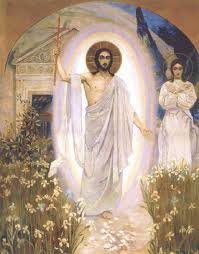
PEACE to each of your hearts as we celebrate the SOLEMNITY of our Risen Lord!
In a homily delivered on March 17, 2013, our Holy Father, Pope Francis said,
I think we too are the people who, on the one hand, want to listen to Jesus, but on the other hand, at times, like to find a stick to beat others with, to condemn others. And Jesus has this message for us: mercy. I think — and I say it with humility — that this is the Lord’s most powerful message: mercy.
In February of this year, Pope Francis declared a Holy Year of Mercy beginning on the Feast of the Immaculate Conception, 2015, and culminating on the Feast of Christ the King, 2016, by saying,
Dear brothers and sisters, I have often thought about how the Church might make clear its mission of being a witness to mercy. It is journey that begins with a spiritual conversion. For this reason, I have decided to call an extraordinary Jubilee that is to have the mercy of God at its center. It shall be a Holy Year of Mercy. We want to live this Year in the light of the Lord’s words: “Be merciful, just as your Father is merciful. (cf. Lk 6:36)”
This Holy Year will begin on this coming Solemnity of the Immaculate Conception and will end on November 20, 2016, the Sunday dedicated to Our Lord Jesus Christ, King of the Universe – and living face of the Father’s mercy. I entrust the organization of this Jubilee to the Pontifical Council for Promotion of the New Evangelization, that [the dicastery] might animate it as a new stage in the journey of the Church on its mission to bring to every person the Gospel of mercy.
I am convinced that the whole Church will find in this Jubilee the joy needed to rediscover and make fruitful the mercy of God, with which all of us are called to give consolation to every man and woman of our time. From this moment, we entrust this Holy Year to the Mother of Mercy, that she might turn her gaze upon us and watch over our journey.
If, as our dear Bro. Larry often urges, we are meditating on an article of our Rule each day, Article 5 (corresponding with Easter Sunday this year) tells us,
Secular Franciscans, therefore, should seek to encounter the living and active person of Christ in their brothers and sisters …
Sometimes being merciful isn’t easy. It requires a shift within ourselves that can be difficult to make but, if we can allow ourselves to enter into the adventure of grace, we can, as our Holy Father says, become witnesses to mercy and live in the light of the Lord’s words: Be merciful, just as your Father is merciful.
Blessings, every good, and much love,
mattie
|
|




 Comments are closed

![2845_250[1]](http://www.skdregion.org/wp-content/uploads/2845_2501.gif)
![mm6[1]](http://www.skdregion.org/wp-content/uploads/mm61.jpg)